#DrivingMissMaisie hits the Big Time — sort of

Many thanks to the Boston Globe Travel section for running this story on Sunday, July 18 on If We Knew then What We Know Now about #vanlife camping in the wild. Hope you enjoy:

https://www.bostonglobe.com/2021/07/14/lifestyle/sleep-anywhere-van-think-again/

TRAVEL

Sleep anywhere in a van? Think again

We learned the hard way that you can’t just wing it when you’re trying to find a place to park your RV for the night. Here are some tips we learned along the way.

By Sue Hertz Globe correspondent,Updated July 14, 2021, 12:00 p.m.
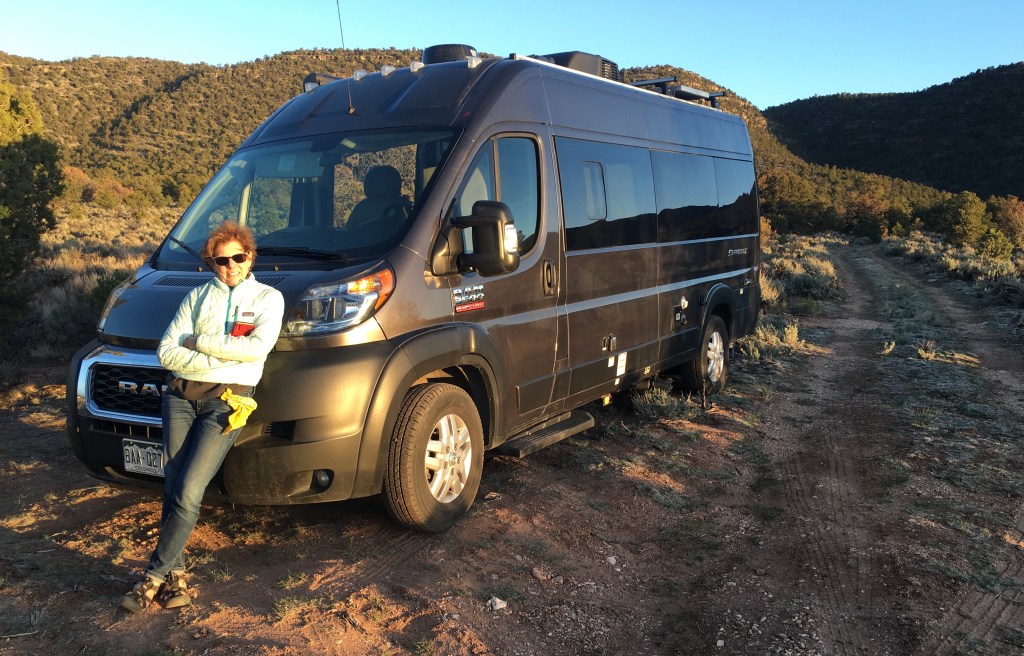
The woman with the broad face by the door at the Kayenta, Ariz., Chevron station smiled ever-so-slightly. “Camping?” she said, pointing up the highway from where we had just driven in our rented camper van. “Utah. Or maybe the Grand Canyon.”

What she didn’t say was: “Idiot. There is no camping on tribal lands.” And tribal lands — Navajo and Hopi country — is where we’d travel for the next few hours into darkness.

Instagram paints #vanlife camping in a romantic hue. Wake up by a mountain stream, a California beach, a field of wildflowers. Vanlifers rave about the freedom of pulling over anywhere. What they neglect to add is that finding those glorious, and even not-so-glorious, spots requires research, the right apps, and people. Hard copy maps are also a plus.

Had I done a little legwork, I would have known that we would not find a welcome mat between Monument Valley and the Grand Canyon, our destination for the next day. I would have known that as I punched my camping apps while the Chevron woman watched, that the site I chose may have been 30 minutes from the Grand Canyon, but it was also on the other side of the Delaware-size natural wonder. Four hours away. We were less than a week into our monthlong #vanlife tour of the West, and this was our first stab at camping without a reservation. Parked in the Chevron lot, we wondered how anyone found campsites off the grid.

But they do, and now after a safe return and many happy nights camped in the wild, we have some suggestions for the 56 million North Americans who, according to the RV Industry Association, plan to vacation this summer in everything from teardrop trailers to bus-size motorhomes to Ford vans that they own, rent, or borrow. To be sure, many, especially first-timers, will feel more secure with reservations at official campgrounds, such as KOA. Official campgrounds, after all, provide amenities, ranging from toilets and showers to dog parks, playgrounds, swimming pools, and laundromats. Some will have dumping stations for rigs to fill the fresh water and deplete the gray (sink/shower) and black (toilet) water tanks.

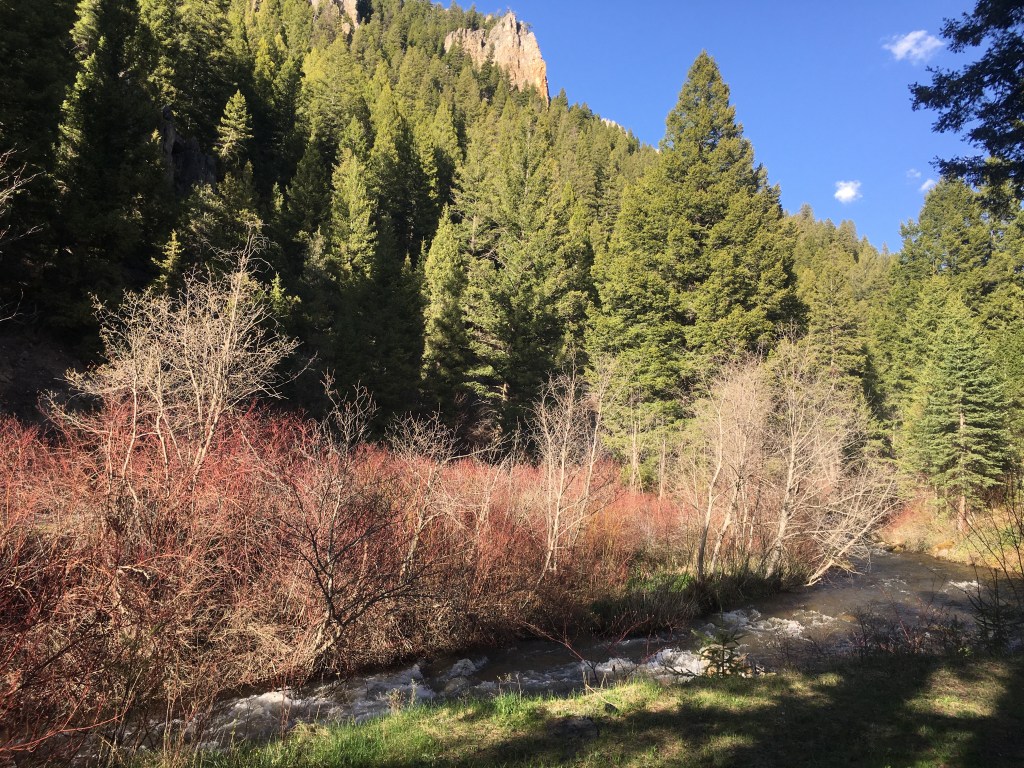
But as legions of families, couples, and solo adventurers break out of their COVID bubbles in the next four months, available designated campsites may prove elusive. And that’s where boondocking, or dispersed camping, or whatever you want to call free camping comes in. In some cases, the most luxury you’ll find is a vault toilet, but most often you’ll perch on land with nothing but the wind. You are expected to pack in and out all of your stuff, to leave no trace — no beer cans, no toilet paper, no food scraps. You are expected to bury all human and pet waste six inches deep and 200 feet away from any water source, and to extinguish all fires. Without a staff to protect and maintain these wilderness sites, campers are responsible. A small price to pay for a night by a stream with only Redwoods for company.

Where to camp for free, or perhaps a small fee

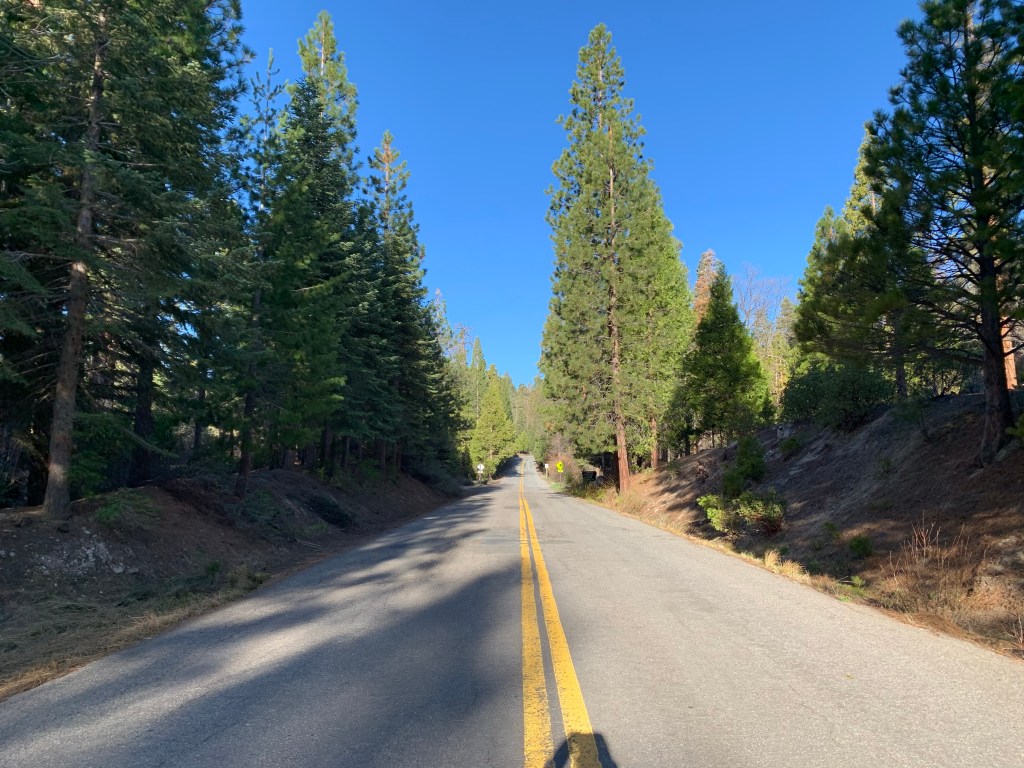
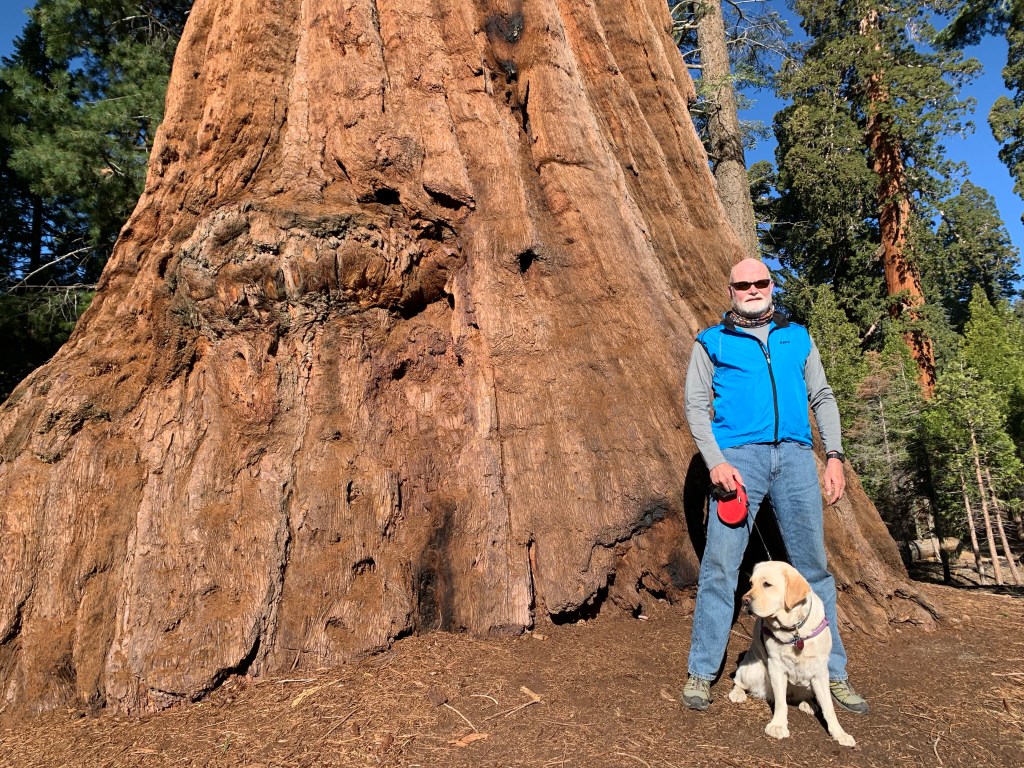
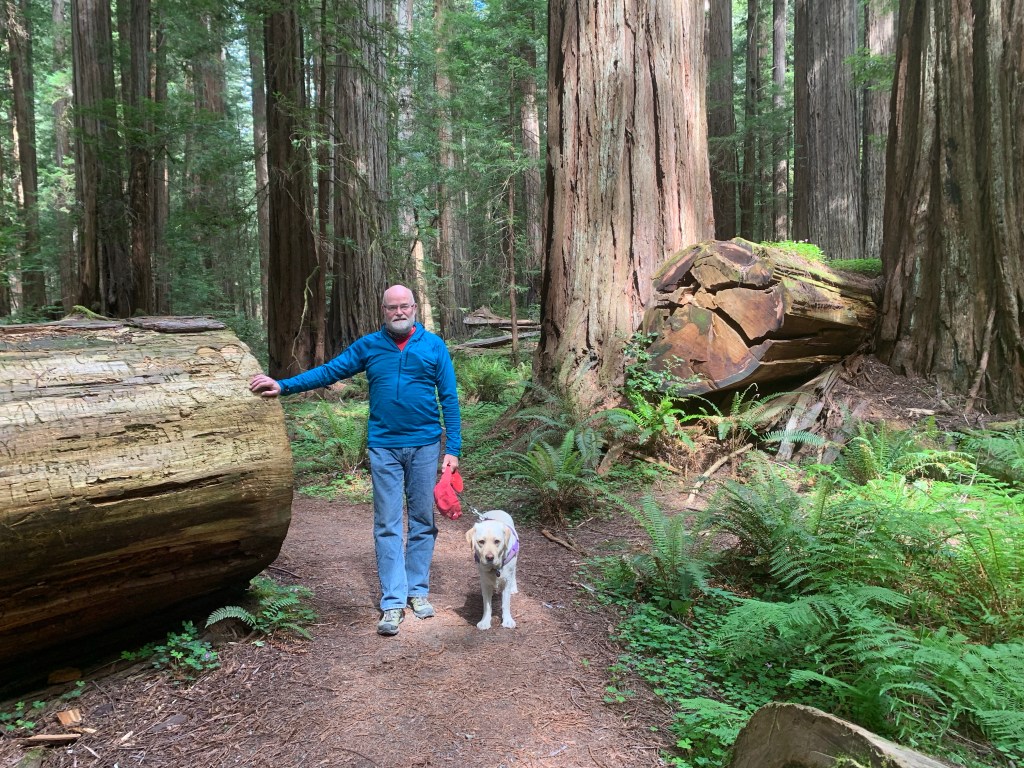
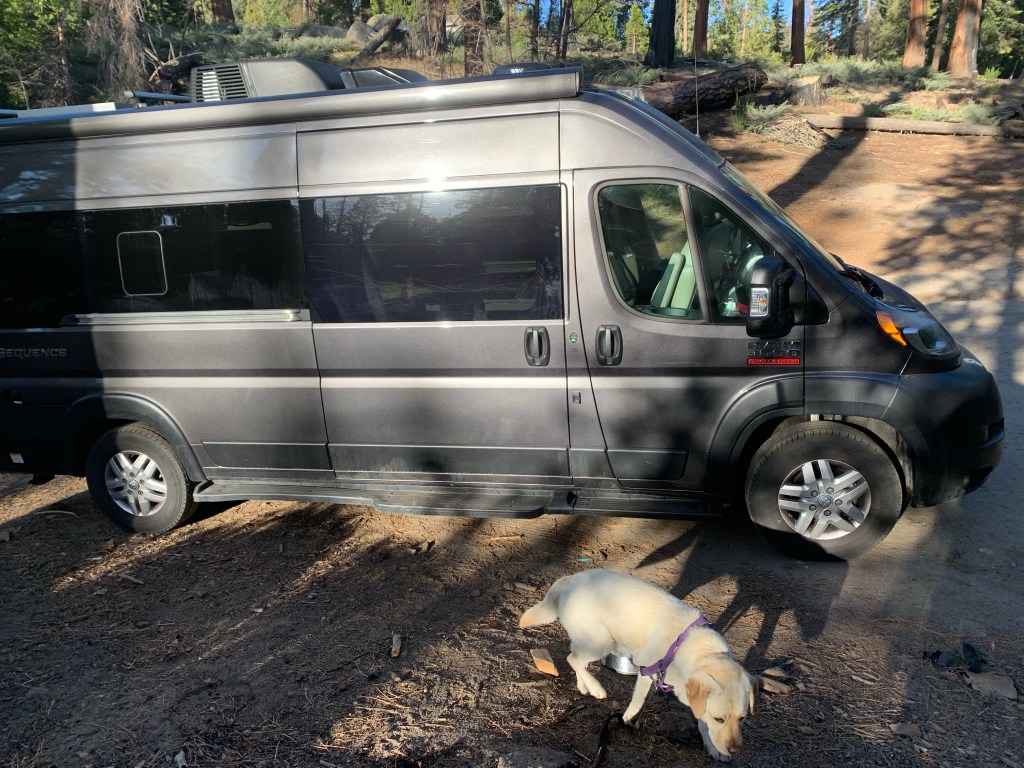
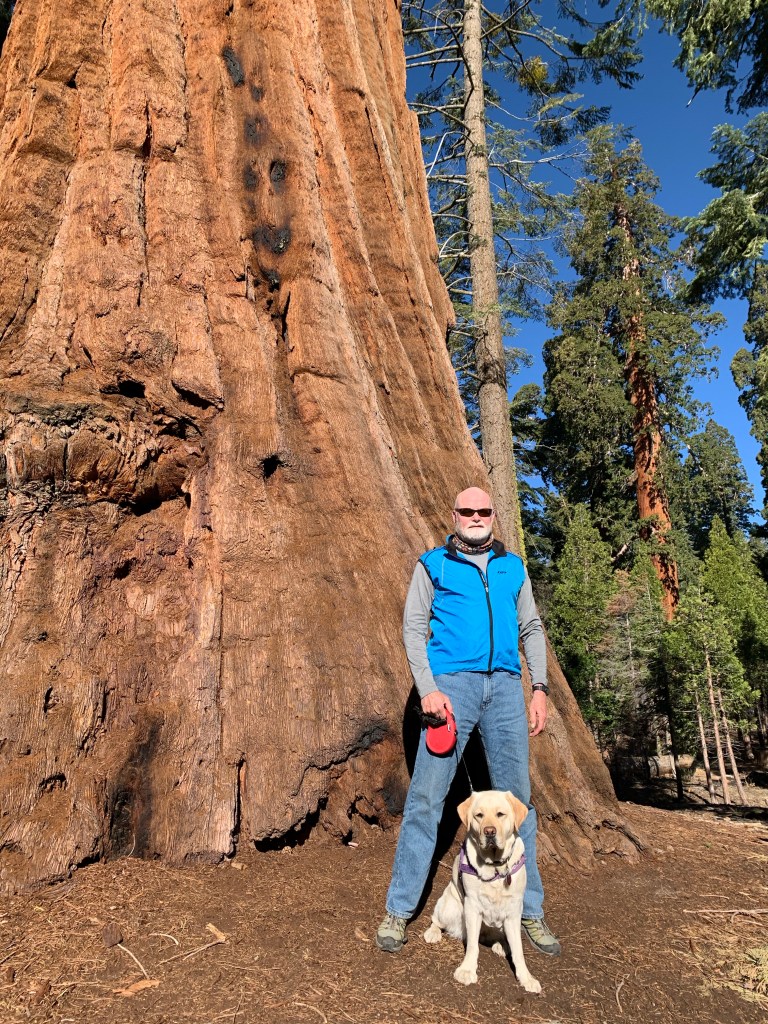
Public lands. When we talk about dispersed camping on public lands, we do not mean national parks. If a national park allows backcountry camping — and many do not — it is tent only. The public lands most hospitable to parking your rig overnight are woods and fields operated by the US Forest Service and Bureau of Land Management. The difference between the two organizations is a little confusing since many of the kinds of land they oversee overlap, but suffice to say both are under federal jurisdiction and are supported by your tax dollars. Although there are scattered sites around the Midwest and East Coast, most USFS and BLM land hospitable to overnight free camping are in the West. USFS or BLM camping is often found on secondary roads, and include remote sites in the woods or on a field, or perhaps by the side of the road. There are no amenities. No picnic tables. No fire pits. No toilets. A 14-day stay is usually the maximum allowed. Our favorite stay was a wooded site deep in the Sequoia National Forest that we found by driving on a rural road in search of the Trail of 100 Giants, a grove of the massive trees.

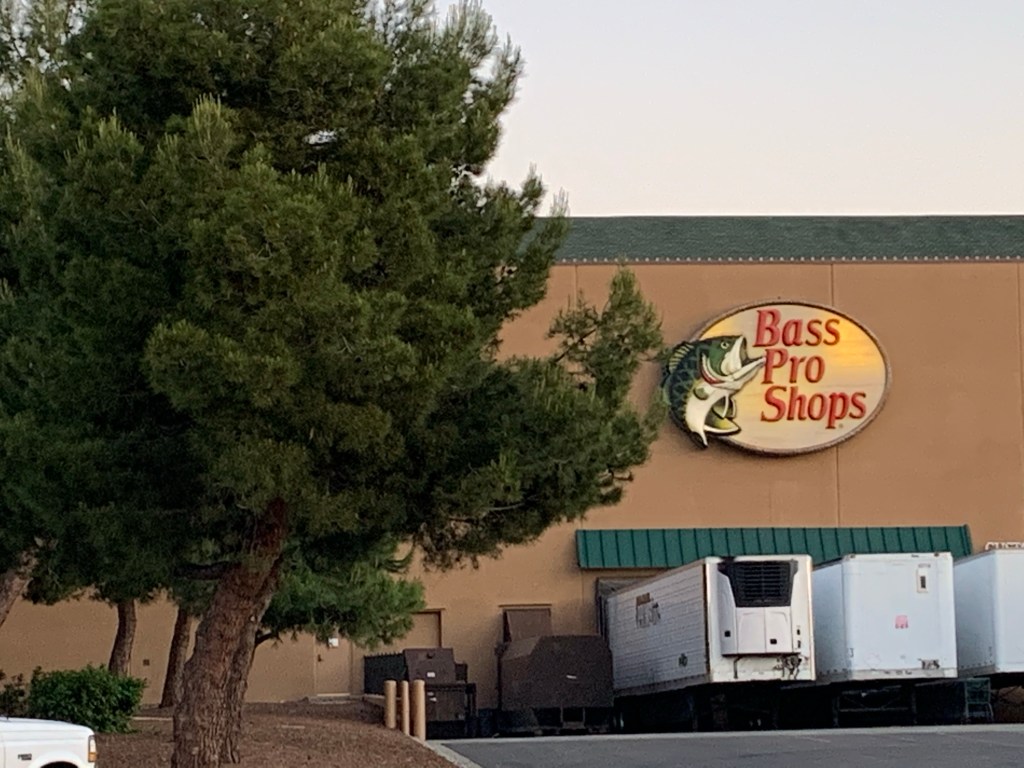
Parking lots. Walmart. Bass Pro Shop. Cabela’s. All are reputed to be friendly to RV and van overnight camping. But not all parking lots are created equal, and some stores do not want your rig on their property after hours. Best to call ahead. In our case, the Bass Pro manager said that overnight camping was once welcome on her central California asphalt, but then Bass Pro sold the parking lot to the neighboring movie theatre. Still, she said, she sees plenty of Jaycos and Sprinter vans setting up for the night. “So I should ask for forgiveness rather than permission?” I asked. She laughed. “I’m not saying yes,” she said. “But I’m not saying no.” Despite a flock of quacking geese in the mall’s pond, our night in the Bass Pro lot was uneventful, if bright from overhead lights. Security drove by at 1 a.m. but didn’t stop. We drove off just as the morning crew arrived to pick up outside litter.

Neighborhoods. Like parking lots, not all neighborhoods embrace camper vans and Winnebagos lining their sidewalks. Yet floating between residential streets is a common strategy among vanlifers. The key is to find neighborhoods in which a large vehicle with out-of-state plates will not attract attention and to not overstay your welcome. We spent one night on a side street in Manhattan Beach, Calif., behind Son #2′s apartment. A little uncomfortable — we were on a slight incline — but neighbors didn’t complain or call the police. We were lucky. Anyone who has pulled up into an empty public spot fears The Knock. Two women we met in Wyoming had successfully boondocked in their Travato in Key West, until they didn’t. On their second night in a marina, the police rapped on their door, and told them to move on. One night was fine, but no lingerers.

Harvest Hosts: Technically, by joining Harvest Hosts for the annual fee of $99, you can book a free dry camping (no amenities, including water or toilets) at any of the 2005 host farms, wineries, or breweries. To be fair to these businesses, and thank them for providing shelter, you are expected to purchase something that they sell. We had looked forward to camping at a winery or farm on our tour of the West, but didn’t connect to any, partially because often there weren’t options on our routes, and mostly because if there were, we were too spontaneous to book ahead. Of the many campers we met who had stayed with a Harvest Host, the reviews were positive. The sites are often not scenic — just the parking lot — but you can sleep without fear of The Knock — and you can depart with some nice bottles of Sauvignon Blanc.

How to find these sites:

Apps. No shortage of digital help tucked into your phone.

General camping apps, such as The Dyrt , Freecampsites,orCampendium, are great for identifying all kinds of potential campsites — public, private, designated, or dispersed, fee or free — across the country.

Other apps are more specific. The USFS & BLM Campgrounds app, for instance, focuses on camping options under the jurisdiction of the two organizations. Freeroam focuses on only BLM sites.

Harvest Hosts app shows all of its hosts and allows you to book (and cancel). Recreation.gov lists all of the country’s federal campgrounds, many of which are in national monuments and forests. Most require a nominal fee, but fees are oh-so reasonable, especially if you have any kind of national park pass.

HipCamp is another app that doesn’t focus on free camping, but inexpensive options. Like Airbnb, it connects property owners willing to share their turf with campers. HipCamp options range from one site with no amenities on a ranch to 20 spots with water, perhaps even a vault toilet, on farmland. And you must book ahead, even if it is last minute. We enjoyed our HipCamp site just outside of Blanding, Utah, on a field with room for nine other campers, on a quiet road that led to a natural bridge and a pueblo.

Maps

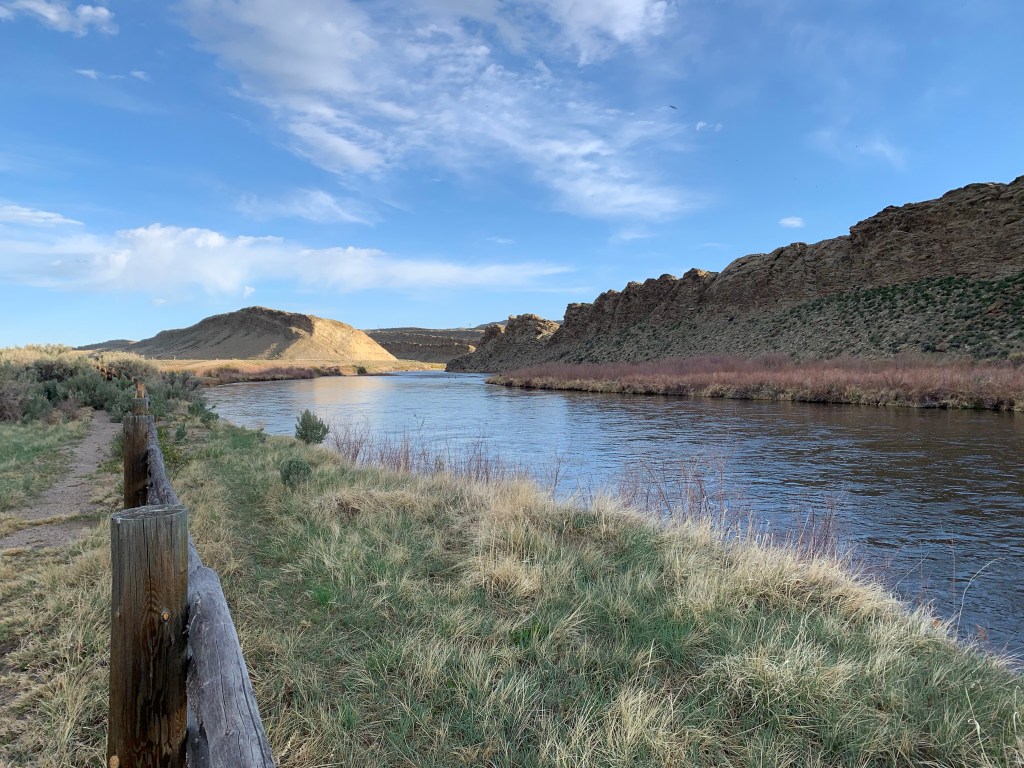
On our second-to-last day of #vanlife, a USFS ranger in Jackson Hole, Wyo., gave me a hard copy map of all the public land in Wyoming and what was allowed in each, from hiking to fishing to camping. Had we acquired such a map — which can be found at ranger’s stations, information centers, even gas stations — for each state visited, our search for free or inexpensive shelter would have been so much easier. Thanks to the Wyoming map, we spent our last night on the road in a blissfully peaceful spot on the Platte River, surrounded by canyons.

People

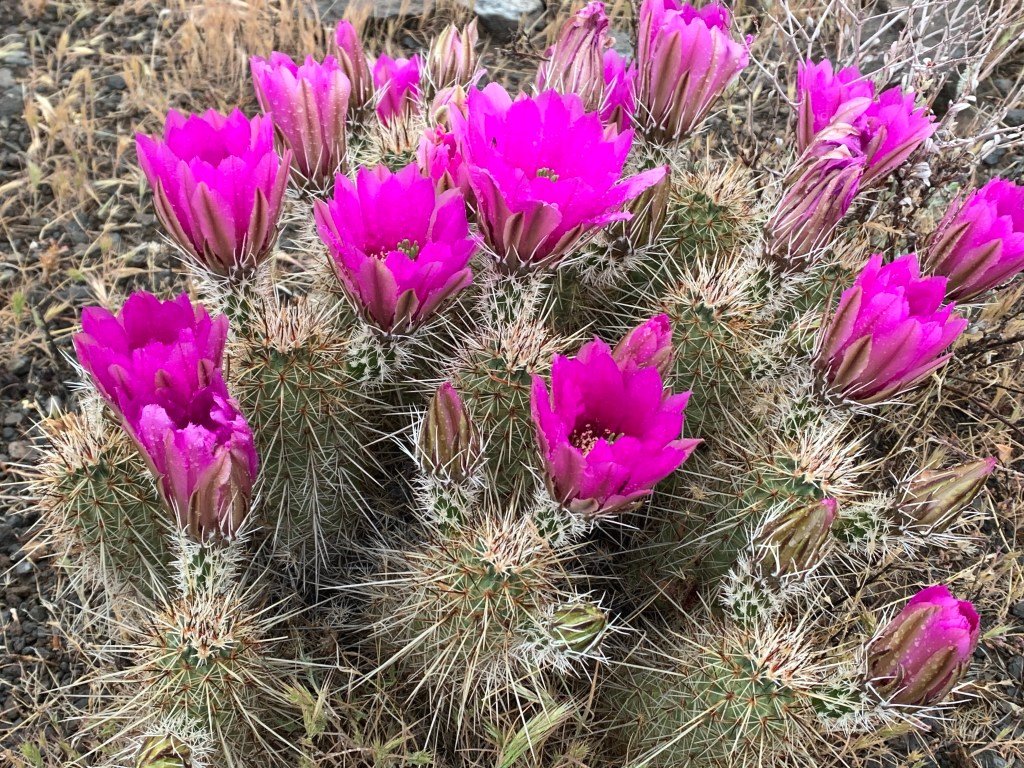
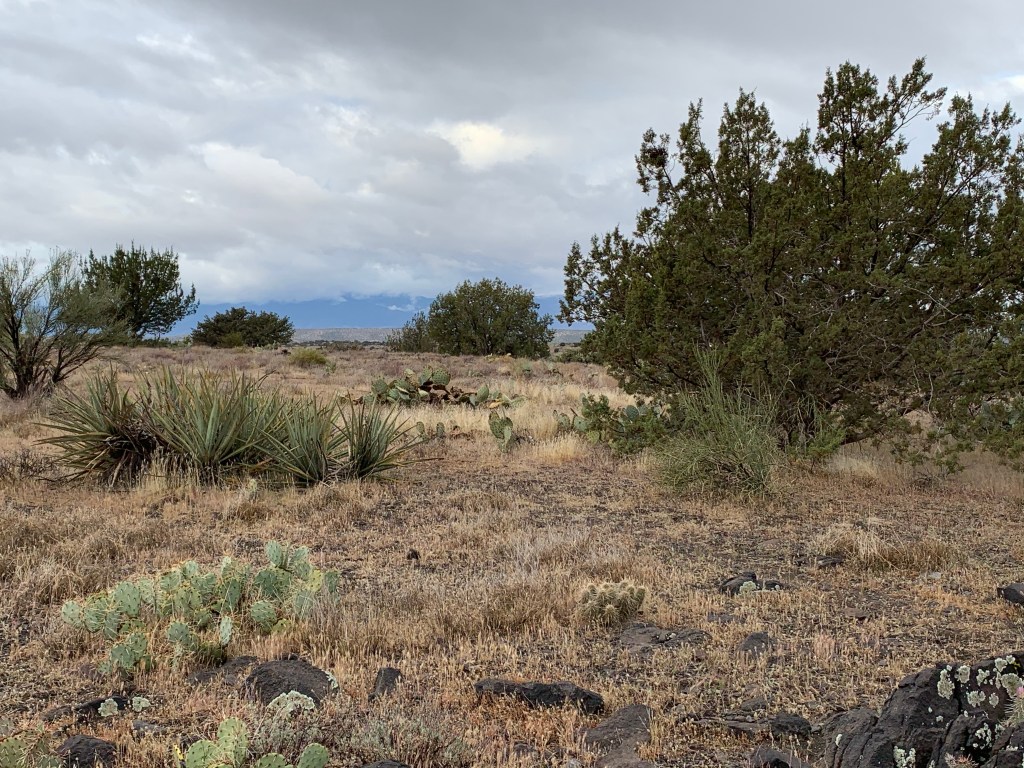
Park rangers are your friends. They can tell you where to camp, and how long you can camp. Visitor information greeters are gold. In hopping Sedona, Ariz., home to boutiques and bars and patio restaurants, the woman behind the desk at the visitor info storefront didn’t hesitate to direct us out of the congested downtown south on Route 89A to the 525, a National Forest fire road. Surrounded by acres of cactus and yucca plants, we snagged a site for the night, the silence interrupted only by the occasional rumble of a Subaru or pop-up camper seeking a spot to call home.

Fellow campers, too, are key sources. In Denver, our #vanlife starting point, Son #1 shared a pin drop on a Google map of a national forest outside of the Grand Canyon with free camping. We didn’t think much about it, until we were en route to the national wonder at 5 p.m. with hours to go before we would arrive at the campsite I had booked in the Chevron station parking lot. “Look!” I said to my husband, Bill, who was driving and didn’t want to look at the map on my phone. “Luke’s camping spot is only 15 minutes away.”

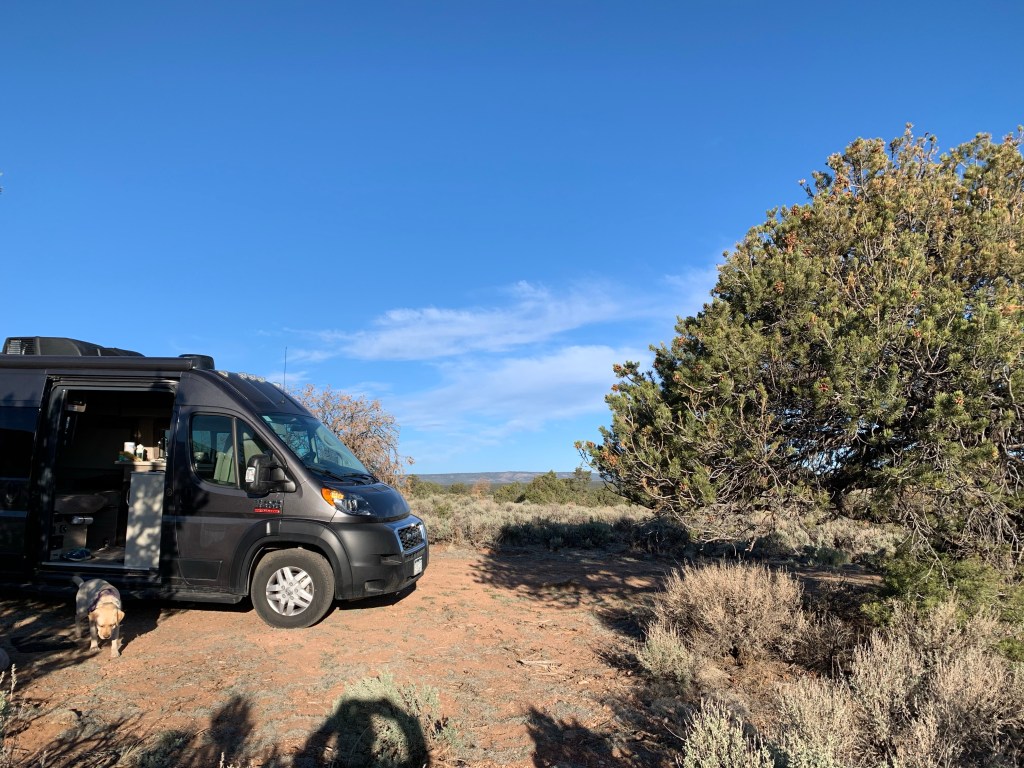
Bill was unsure. He preferred the certainty of a reservation. But since the pin point was on the way, he agreed. And just off Route 64 was the Kaibab National Forest and the fire road where our Denver-based son had camped the summer before. On this late April night, the only other campers were in an old school bus parked off in a field. We slept well, and when we awoke, we could see the outline of the Grand Canyon looming against the sapphire sky.
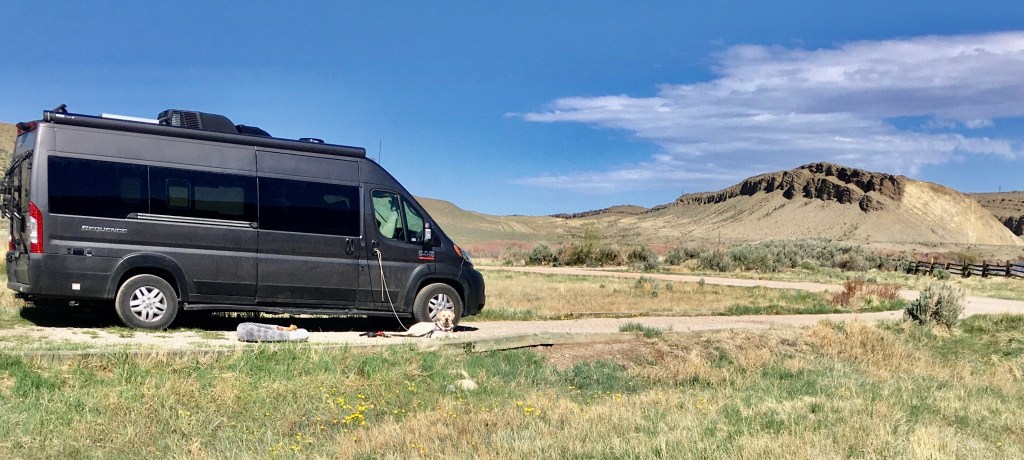
A Farewell to Abbey Road

She rolled down her car window as I stood in the parking space next door, guiding Bill and Abbey Road between the lines. “Hey,” the woman said, resting her forearm on the sill. “Good luck with your marriage.”

I turned, my arms still outstretched. “My parents almost divorced after a week in one of those,” she added before placing her Subaru in reverse and jetting out of the Sedona, AZ public lot.

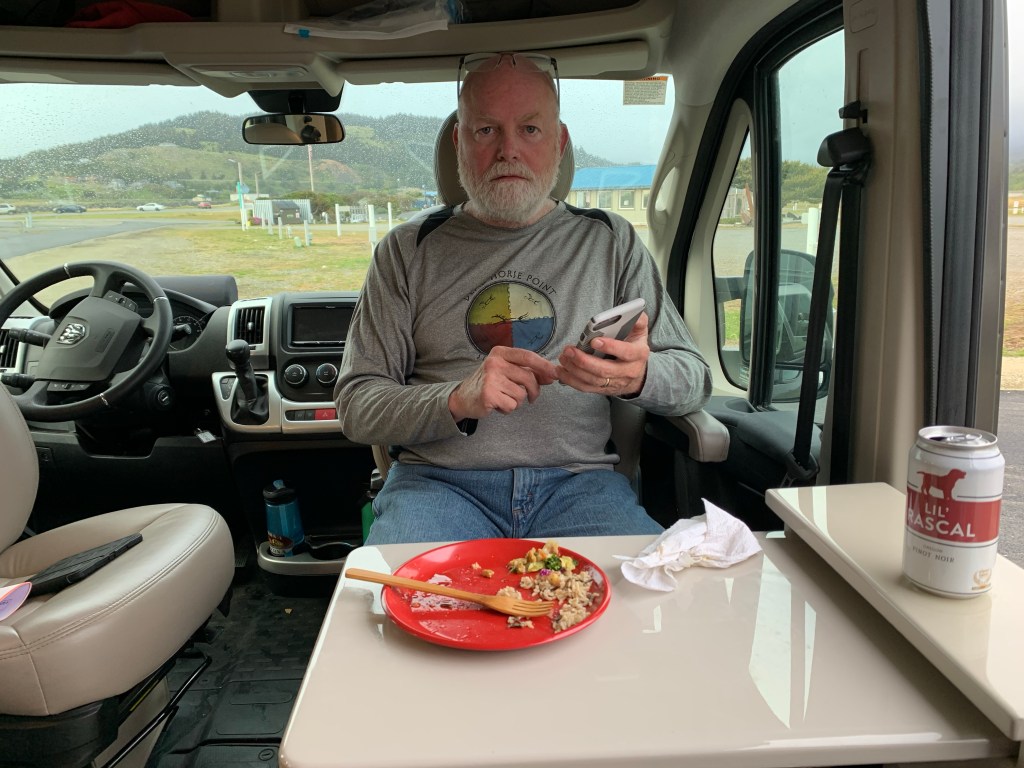
Fair to say our marriage survived. During our #vanlife experiment, Bill learned to let me finish burrowing through the upper compartments before he launched the search for shorts or fleece. I learned to abdicate the passenger seat for his evening comfort. No need for picnic tables or camp chairs. He was comfiest in the fake leather seat turned towards the cabin. Neither of us learned to not issue instructions while the other drove.

On the final lap to Denver, the Friday van drop off date looming, we reflected on the adventure, on living in 140-square feet, what we would miss, what we wouldn’t miss, what we learned. Were we #vanlife converts?

No. And yes.

Bill looked forward to not bumping his forehead daily on the shelf above the driver’s seat. He feared that the head dents had become permanent. He looked forward to a dresser full of drawers and his own closet, an end to rifling through two upper bins and all of his clothing to change his shirt. He wouldn’t miss sleeping in his clothes, tripping over the throw rug, and stumbling on the uneven steps leading into the van. #vanlife can be inhospitable to someone with Parkinson’s. He would not miss driving six, eight, nine hours a day.

Likewise, I couldn’t wait to stop unzipping all seven packing cubes each time I needed a sock switch. I wouldn’t miss washing in cold water because we’d forgotten to turn the water heater on. I would not miss the ever-hovering fear of harming this $92,000 land yacht, as our friend Casey dubbed the behemoth. The items that did break – the kitchen faucet, the closet door – could be easily repaired. But a splintered windshield or cracked undercarriage? Watch that $1,250 damage deposit evaporate. I would NOT miss the aching butt of all-day driving sessions.

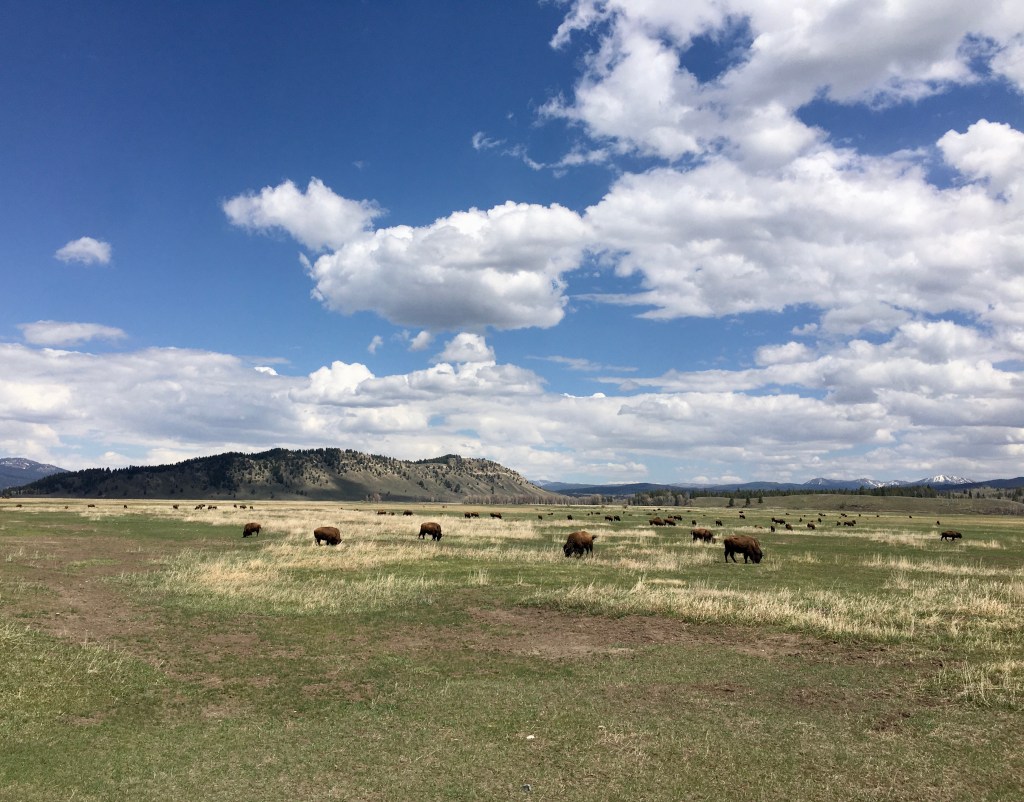
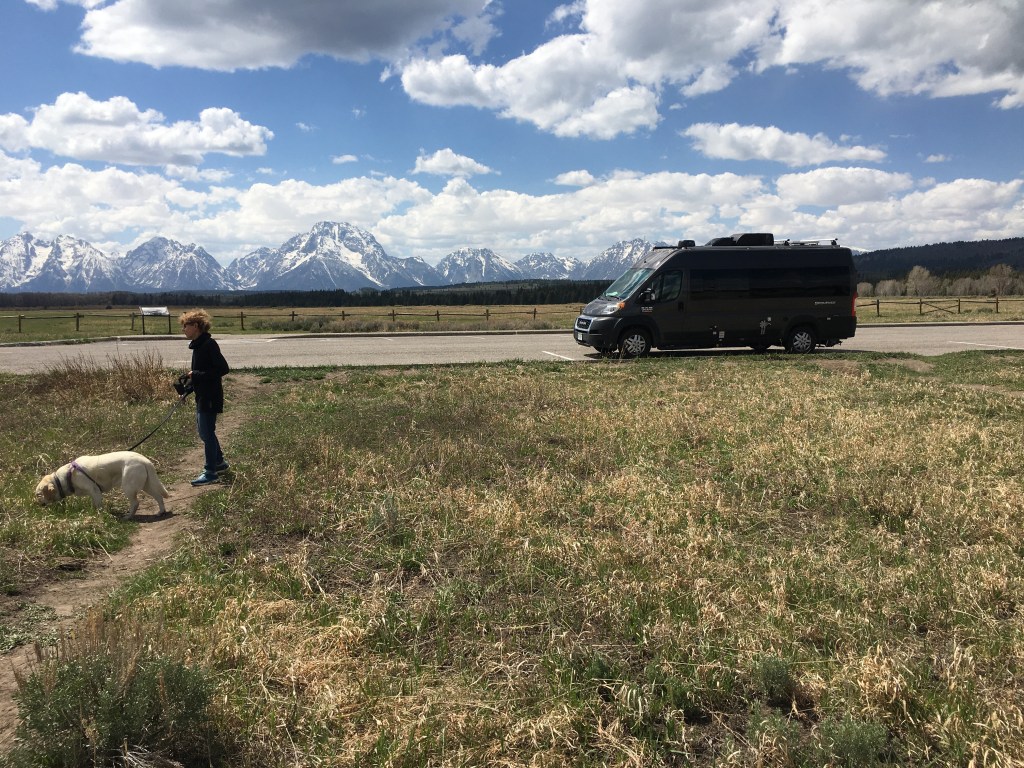
But then, on our second to last day, as we rolled down an empty stretch of Wyoming 287, the jagged Tetons on our right, acres of cattle-dotted plains on our left, the sedentary frustration dissipated. Instead, I marveled at the images before me, and images behind. Images of fly fishermen casting into roaring rivers. Images of dense forests and dark green valleys. Images of red clay mesas and canyons and rock formations that defy gravity. How does a boulder teeter on a slender tower for millions of years? Images of Navajo teens skateboarding and cowboys in trucks. Images of buffalo and sprinting deer and eagles gliding in the sapphire sky. The slideshow was infinite and I realized that had we not logged 5,199 miles in this rented camper van, we wouldn’t have witnessed the vast and ranging beauty that is the West.
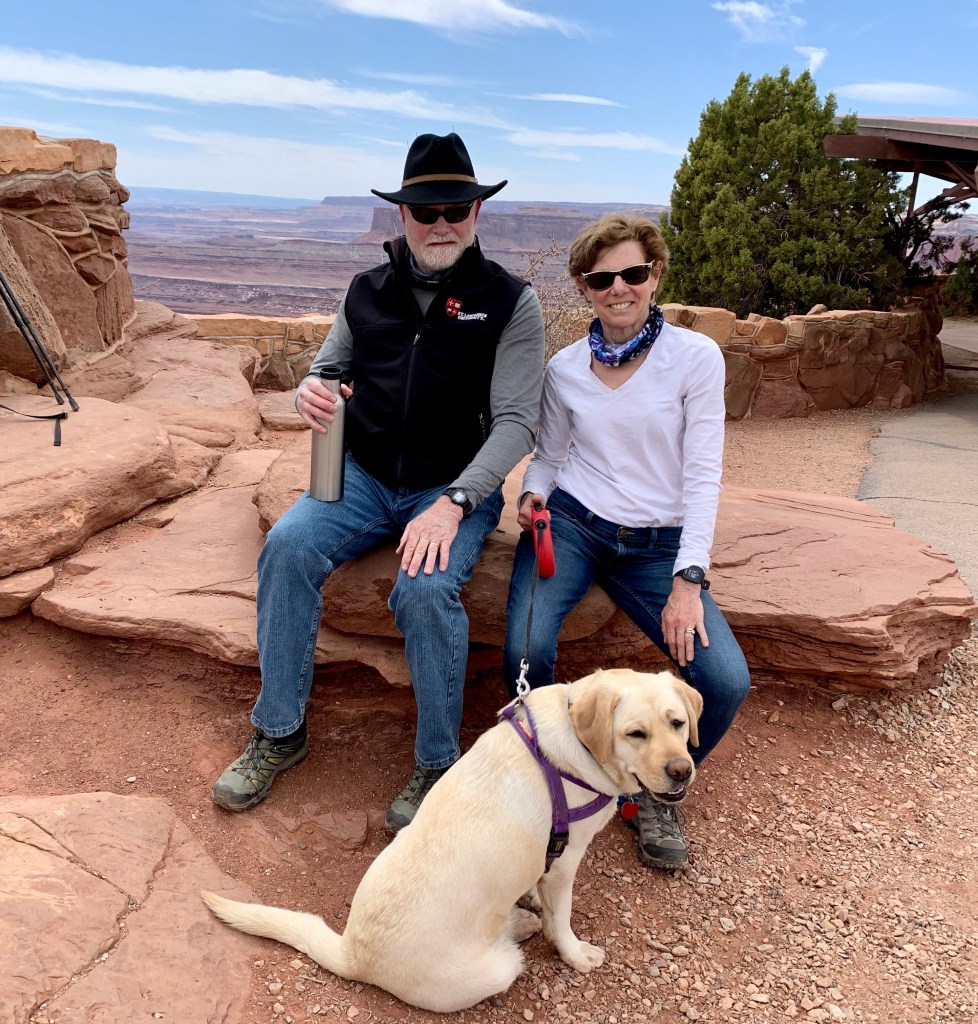
The West has held captive my imagination since that first cross-country drive post-college and the four years living in Seattle that followed. The sense of adventure, of newness, that anything is possible. My home turf, New England, was founded by hard working, church-going Puritans, who left a legacy of nose-to-the-grindstone, elite academies, and historical reverence. Even progressive Massachusetts had Blue Laws that once prohibited things like Sunday shopping. The Northeast offers its share of natural beauty — Plum Island at sunset; Cadillac Mountain at sunrise; Mount Washington any time — and a plethora of cultural and intellectual offerings. Hard to find the likes of the Isabella Stewart Gardner Museum anywhere but Boston.

But the West. Big sky. Big mountains. Big rivers. Big trees. That sense of discovery. There’s a reason that the West gave birth to Google, Microsoft, Amazon, Apple. And while westerners toil plenty hard, they also play hard. One of my earliest memories of working for newspapers in the Seattle area is the metro editor asking if I wanted to join him and other members of the staff for a Thursday afternoon hike. As in leave the newsroom early? Yes. My jaw dropped; the East Coast editors I knew barely looked up from their desks long past quitting time. Yet off we went to explore a nearby Cascade. During that hike, my first in the Pacific Northwest, I could barely speak, so awed was I by the views of this volcanic mountain range.
Decades later, I remained spellbound. Perhaps it was the time length — 4 weeks — that intensified the awe of the West’s natural beauty. Or perhaps it was the immersion that #vanlife fosters. Because we were camping, each night parking our Dodge Ram in the woods, or on a river bank, or beach, we were not distracted by the interior comforts of a hotel room, or airbnb. When we woke up in Humboldt State Park, the first thing we saw was a giant Redwood. At night at Bass Lake, we made sure that all food scraps and smells were tucked away in the van to discourage Boo Boo the bear from visiting. In Florence, Oregon’s state park, moss-covered rocks served as side tables.

And that was Number One on my list of why I loved #vanlife. We were always outside. Even when we lounged inside, such as after the hike through the Sedona canyon, the door was open to the sound of birds and the swirl of red dust. I have always enjoyed camping, but didn’t relish — who does? — the tent set up, the tent take down, the rain-soaked sleeping bags. This round, all we did was drive up, park, open the door, let the dog out, and start dinner. We weren’t sleeping under the stars, but pretty close.

Number Two: The self-containment. Everything we needed was in the van. Wake up, reach into one overhead compartment for a fleece and the other to turn on the heat, and light the propane stove for coffee. With so little space, there weren’t a lot of options for either clothing or meals, which saved a lot of time. Love those packaged salads — Southwest Mix was the favorite, followed by the Thai blend. Too hot? Switch to sandals and shorts. Cold? Grab the down jacket. Have to pee on the road? Walk to the toilet in the back and wave to the people driving behind you.

Number Three: Every day was a new adventure. We had destinations, but often were sidetracked. The beauty of #vanlife is its nimbleness. Leave Yosemite too late to stay at a Harvest Host farm? No problem. Figure out a stopping point and see what’s available. In our case, the Bass Pro parking lot. Not ideal, but memorable. And we didn’t get The Knock. Security guards did not boot us away. Police didn’t ask us to move on.

Number Four: Dispersed Camping. While I would recommend all the federal campgrounds we visited, found on Recreation.Gov, appreciating the toilet facilities (rarely showers) and generous sites in stunning settings (will never forget the view of the canyons from Saddlehorn Campground at the Colorado National Monument), my favorite stays were off the forest roads or on Bureau of Land Management Land. Self-sufficient, we could sleep and eat and hike and bathe in any remote spot that was accessible and flat. Wishing I knew then what I know now, I would add another app to my collection — the US Forest Service and BLM guide to public lands that allow camping — and seek public land maps for each state. It wasn’t until our second to last day in the van, in Jackson Hole, WY, when a USFS ranger handed me a map of Wyoming’s public lands, identifying each campsite, hiking trail, and amenities. To think of where we might have settled for the night or where we could have hiked if we’d had public land maps for every state we visited.

Number Five: Traveling with my spouse and dog. Quarters were cramped but we navigated. We depended on each other for directions, for driving, for daily adventure ideas. We learned to laugh — usually — at the dirt, the benches-turned-beds, the refrigerator that loved to freeze — everything. We learned that reservations at certified campgrounds are great, but with a little research, we could snag a free spot in the wild. We learned that things will usually work out just fine.

To be sure, we were #vanlifers by choice. We were not the itinerant laborers featured in the book and movie “Nomadland,” men and women, young and seniors, who couldn’t afford housing on their minimum wage salaries. And so they roam from seasonal job to seasonal job, Amazon packaging at Christmas to campground hosting in spring. We were also not digital nomads, professionals working remotely as they meandered through canyons and seaports. On our last night in Wyoming, at a tranquil BLM campground on the Platte River, we met two moms and their 6-year-old twins, who had travelled in their solar-powered Catalina for over a year. One mom worked remotely full-time, finding internet cafes when campsites had no reception. The other mom spent her days with the kids, squeezing in some distance engineering when she could. From Wyoming, they were headed to the Badlands. When would they stop? When it is time, they said, perhaps when it is clear that homeschooling and transient friendships are no longer ideal for the kids.

We were not twenty-somethings seeking an alternative lifestyle, nor thirty-somethings escaping rigid office jobs. We were, instead, members of the privileged middle class who could afford the time and sizable fees to rent a moving home for a month. We were among the thousands who, thwarted by Covid for international travel, opted for #vanlife as an alternative. For us, #vanlife was not so much a way of living, but a way of adventuring.

Shortly after dinner on the Sunday night we spent at the KOA campground in Spokane, WA, we met a Colorado couple, Hal and Marie. Retired, they were on a tour of the Northwest in their 32-foot RV, which they loved but were curious about something smaller. So we showed them Abbey Road and while Marie appreciated that we could fit into a downtown parking spot, she didn’t like the combined shower/toilet. “That wouldn’t work,” she said. Hal was more interested in our first-timer perspective, asking where we stayed, how the dog fared on long driving days. How did it compare to other trips? Other ways to vacation?

“And here’s the $50,000 question,” he said, stroking his chin. ” Would you do it again?”

In a heartbeat.

Life is Good if You’re a Lab

Our vet said once that in her next life she wants to come back as a lab. Motivated by food and fetch, they wake happy, joyful at the prospect of another day of kibble, Kongs, belly rubs, and head scratches. Most would include walks on the list.

Not Maisie.

Let me clarify: leashed walks.

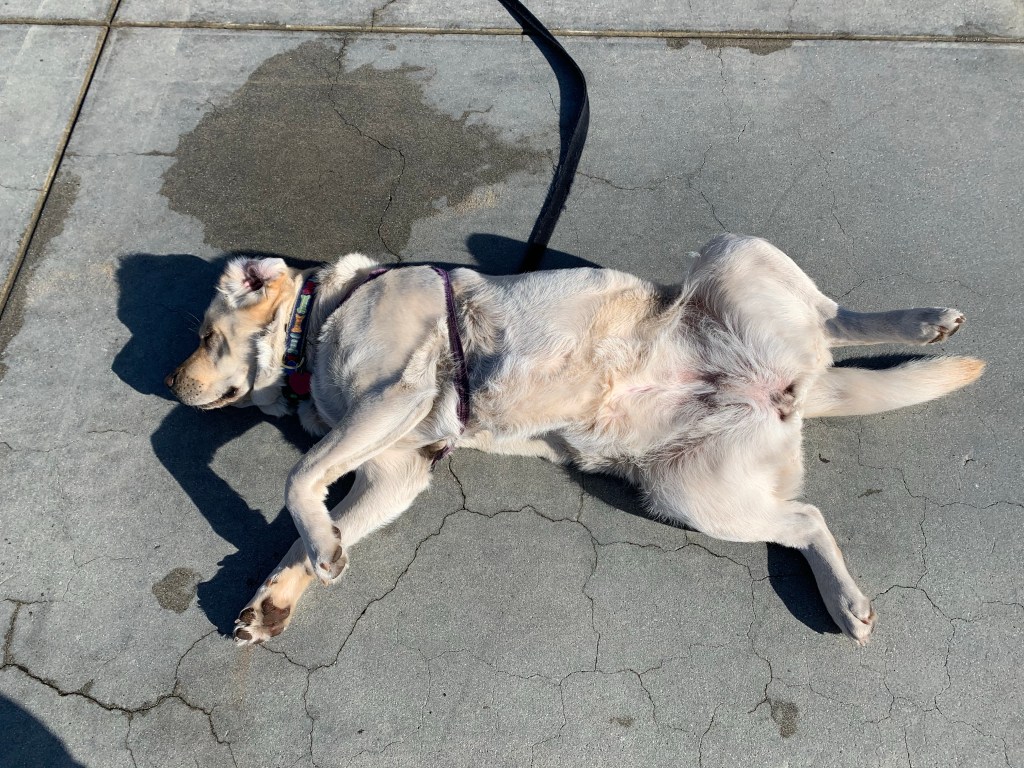
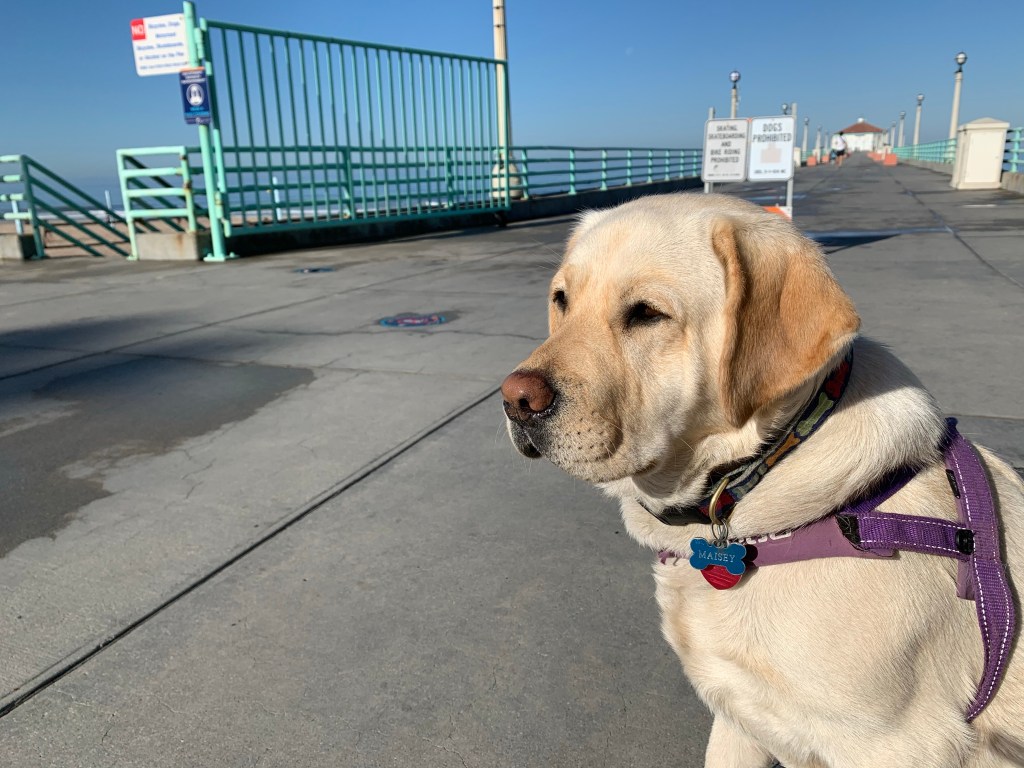
At home, she often requires bribes to leave the driveway. Once in the rhythm of the outing, she’ll be fine – most of the time. Sometimes she requires another dog for company. Others, she just stops. “Lazy Maisie” our neighbors call her.

Off-leash, she could romp forever. Beach. Woods. Field. One paw in the water ignites the zoomies. But on a van trip around the West, the threat of bears and mountain lions and rattlesnakes real, untethered walks would be rare. Which left us fearing that Lazy Maisie would turn into Crazy Maisie. How would she survive thousands of miles in a van without regular exercise? How would we survive?

Just fine, it turns out.

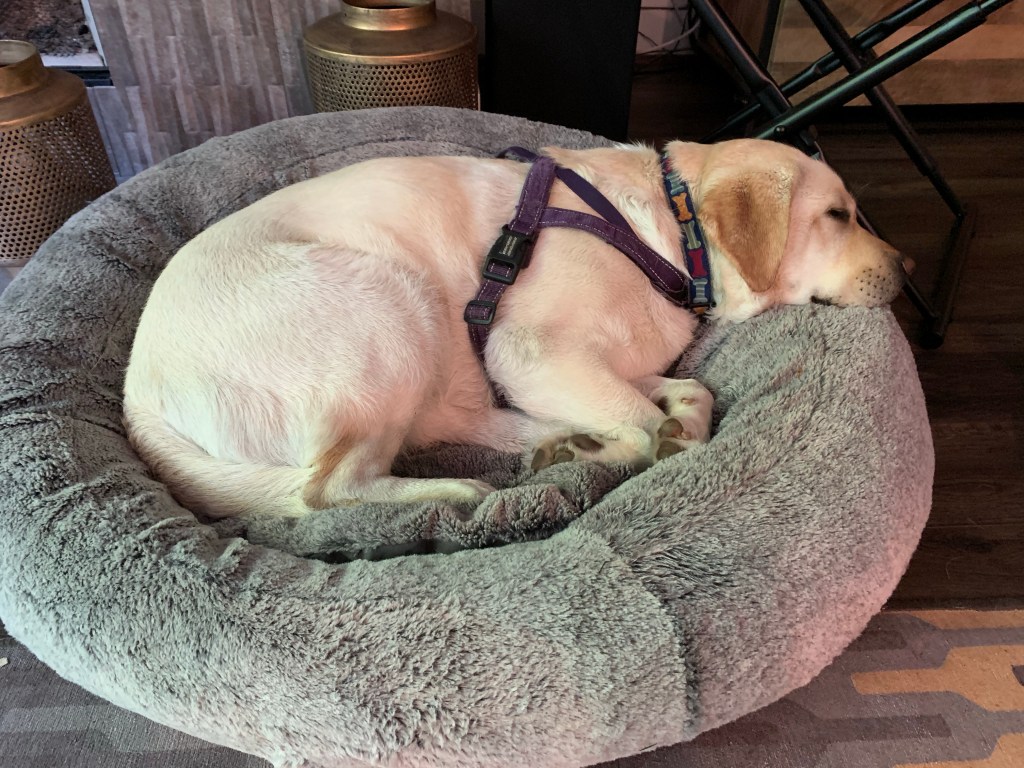
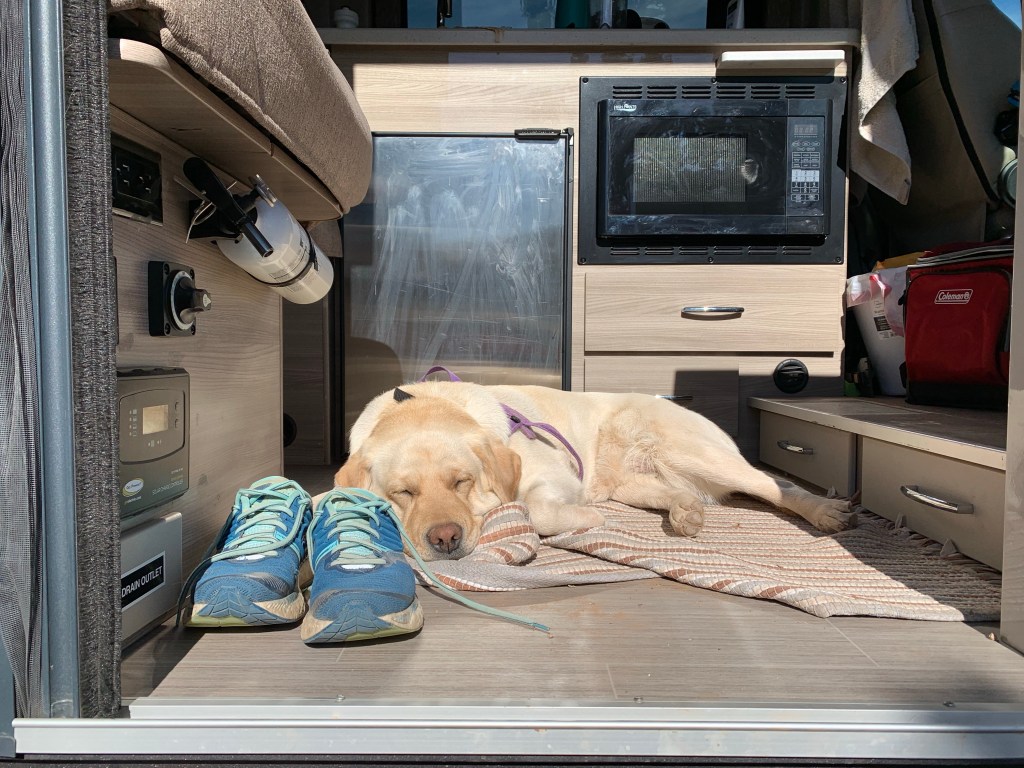
As our vet said, labs are inherently content. Maisie was perfectly happy nestled in her nest for hours and hours of driving, or while visiting friends along the way.

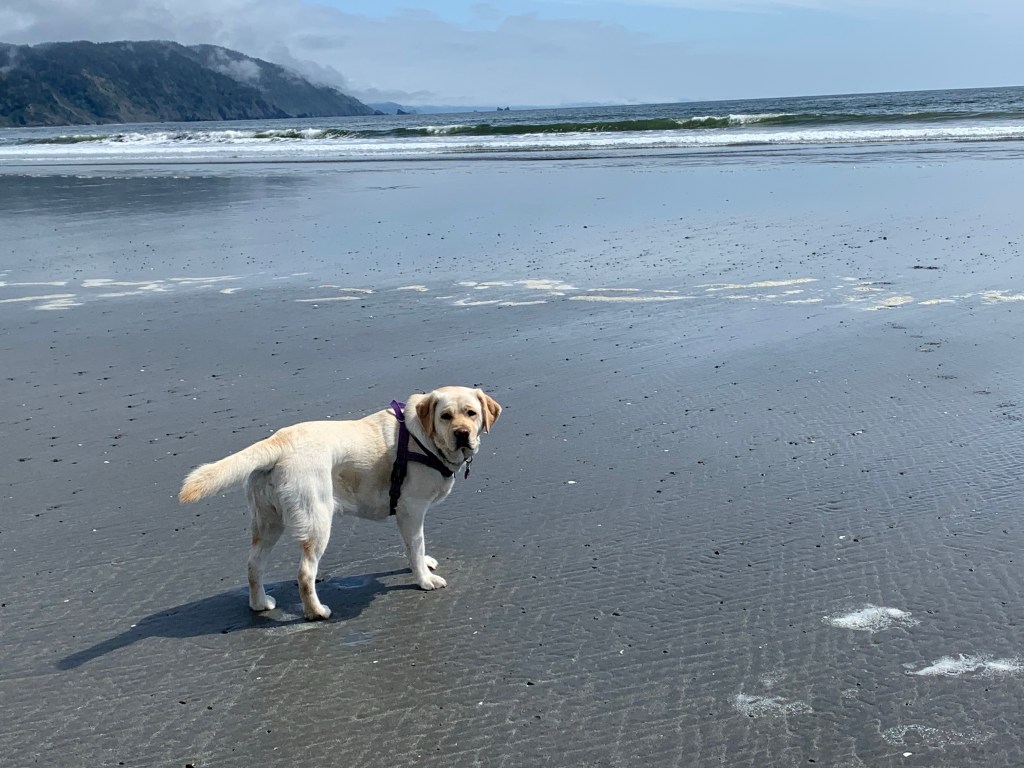
She was perfectly happy exploring trails and parks and beaches off-leash.

She was even happy on-leash if the day was young and the terrain unique.

She was not, however, interested in walks around neighborhoods or sidewalks or dirt roads or paths that led her away from campsites or friends’ homes, or anywhere that spelled home base. It was if a force field held her captive in the Seattle yard of our pals Roger and Evelyn. Across Lake Washington in Issaquah, our host Greg found her walking reticence hilarious. “She is not a dog,” he said.

Yet as irritating as I found the Frozen Paw Syndrome, as impatient as I grew with my need for exercise thwarted by her disdain for it, I realize now as we begin the journey home, that Maisie was the perfect canine companion for our #vanlife adventure. She loved the hours and hours of undisturbed rest in the back of the RAV4 en route to Denver and the 5,199 miles logged in Abbey Road, her nest tucked behind the van’s driver and passenger seats. She was grateful for rest stops and never met a campsite she didn’t like. She relished our constant presence. And she was never perkier than when in the company of other dogs and kids.

Countless people stopped to pat her, ask if she’s full grown (yes), and admire her mellowness. “Labs are usually hyper,” we heard again, and again.

She has her moments, but for the most part, she is chill, and what more could we want in a dog on a cross-country road trip?

Well, one that walks when I want to walk.

When Maisie Met Frankie

Love at first bite.

Oh, there had been others. Sunny in Oregon. The border collie in Utah. Ruby at Huntington Beach. But only to Frankie did Maisie attach like a barnacle.

A 4-year-old black lab, Frankie wooed her with pool leaps and hors d’oeuvres snatching. Unnecessary; he had her at the first tussle, as they rolled and nipped on the grass, in the dirt, over the gravel, and underfoot. So smitten was she that Maisie almost – repeat almost – skipped breakfast to find her new squeeze after the long night apart.

Nothing better than new friendship – except, perhaps, friendship forged over decades.

Lots of decades.

When plotting a trip, place is generally the determining factor. And place, of course, played a major role in our #vanlife itinerary. Who doesn’t want to witness the red canyons of Southern Utah? But, in truth, people cemented the key destinations. Maureen and John in Buffalo, NY, our first stop. Lorrie and Jim in Denver – pals since we were all 20-something singles drinking cheap wine at the Ferry Landing in Portsmouth, NH.

Our sons – one in Denver, the other in Manhattan Beach, CA.

Down the coast in Laguna was 93-year-old Dorothy, a mainstay in my world since college when I travelled all over Europe with her daughter Paula.

Our godson Matt in Hood River, Oregon.

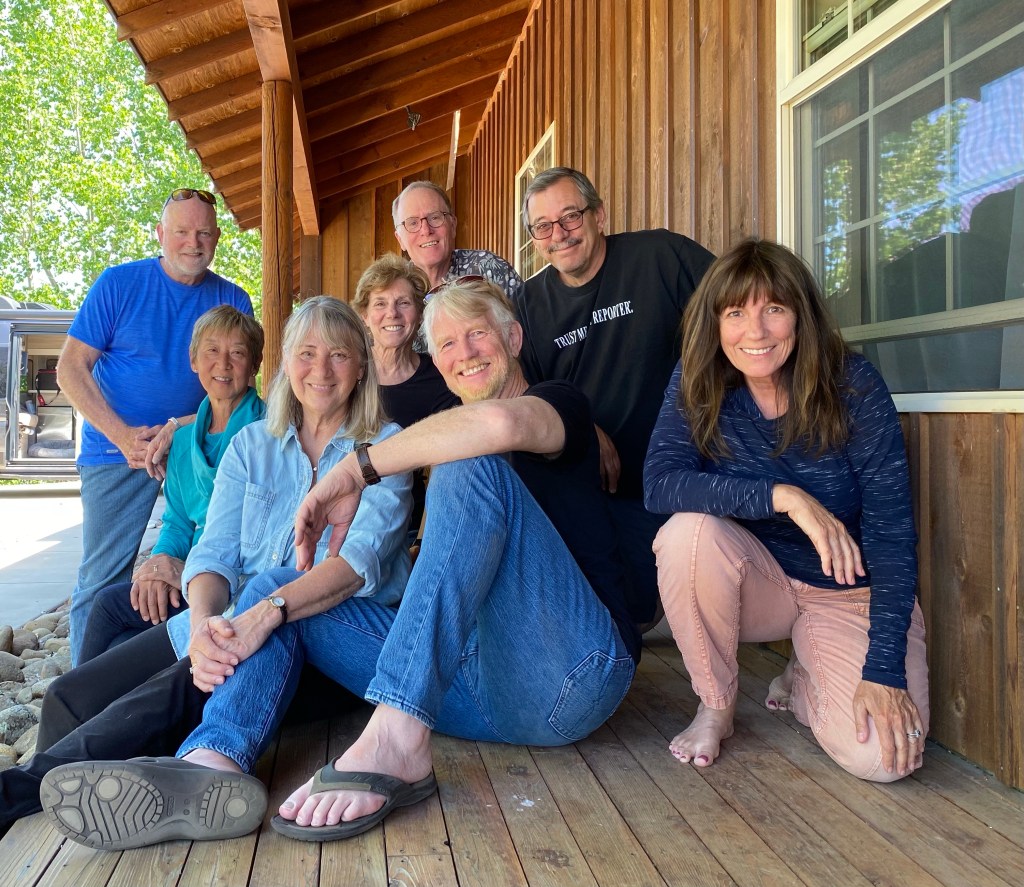
And we couldn’t tour the west without visiting Seattle, which promised a reunion with the dearest and closest of friends, including Paula, who drove west with me after college graduation, and Janet, a pal from junior high who persuaded us to visit her in Seattle, where she lived with two fellow University of Vermont grads. And Val, another UVM grad who found her way to the Emerald City and never left.

And the journalism crew. Nothing like a newspaper newsroom to forge bonds. Perhaps it was the tight quarters. The constant collaboration. The constant pressure to produce. The constant schedule of after-work drinking. Whatever. Despite the four decades that have passed since we kicked the soccer ball around the Seattle Post-Intelligencer features department, among my favorite companions on the planet are the members of this tribe.

Frankie belongs to Casey and Sally, who hosted a weekend gathering (thank you Pfizer and Moderna) at their Yakima home, a little slice of paradise that included a pool, unrestricted views of neighboring valleys, and soaring hawks. It was hard to leave the laughs, the banter, the recipe sharing via the Paprika app that Ev recommended, the debates on whether prostitution should be legalized or if the Democrats can hold onto the House and Senate. It was hard to leave Paula, her husband Greg, and their clan of kids and grandkids.

In a way, traveling by van to these friends, to this former stomping ground that I have visited dozens of times since I returned back east to be closer to family, deepened the joy of the reunion. One reason: driving thousands of miles is a bit more challenging than hopping a 5-hour flight. But the real reason, I think, was that we arrived a self-contained package, complete with dish towels and dog. Although we were delighted to sleep in real beds and bathe in real showers, that we had our own mini house made us feel less like out-of-town guests and more like temporary residents.

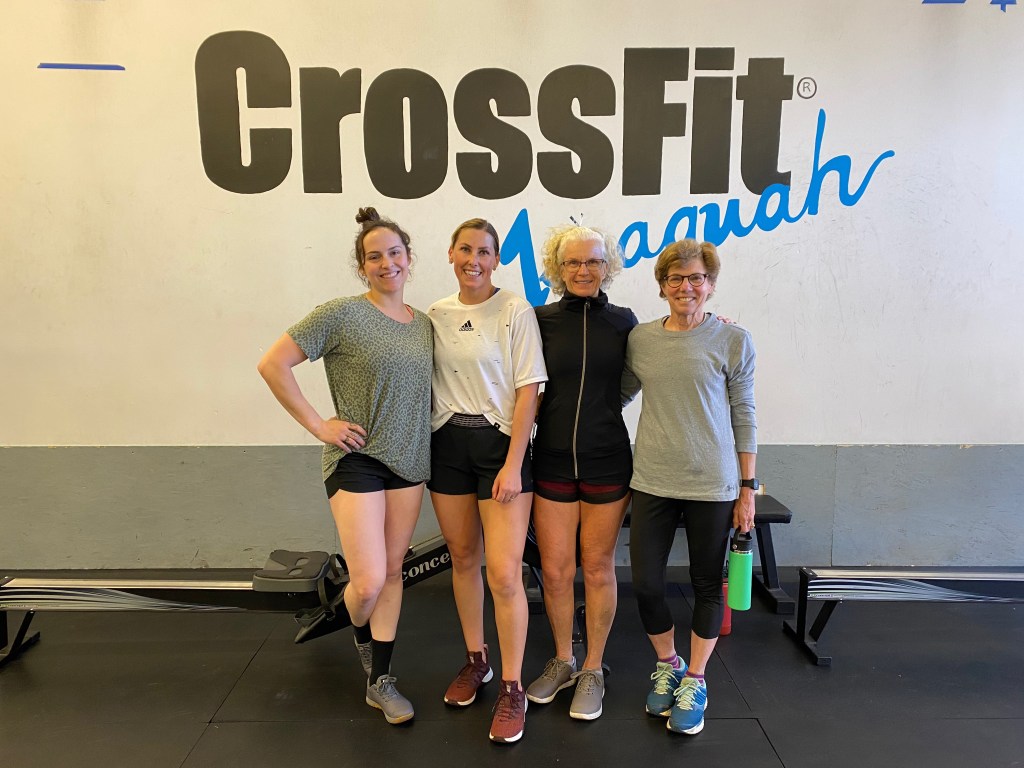
As we drive the final leg of our van journey, I am awed by the beauty of Montana’s raging rivers, endless sky, pastures of grazing cows. I love the expanse of road cutting through mountains as we make our way to Yellowstone and the Tetons. I regret that we couldn’t visit more of our Northwest buddies – next time Donna and Chuck, I promise – or spend another week dragging Maisie on walks through Carkeek Park and eating Micki’s desserts and attempting more weights at CrossFit with Paula, I am so very grateful for the days we shared, and hope that the memories will buffer the pain in my keester as we drive the thousands of miles home.

If not, I can devote the west-to-east route sending Evelyn recipes on Paprika.

Equipment Superior to Operator

Google Maps. Apple Maps. Punch in the address one more time.

If, as the sign says, we are in the Sequoia National Forest, where pray tell are the giant trees? Beside us roars the Kern River and we just passed Isabella Lake, wild with white caps in this wind. In front are layers of brown, arid mountains dotted with a few pines. We drive thru tiny towns featuring saloons and rafting trips. But no big trees.

We drive and drive, begging for cell reception, seeking details on our paper map. We are here early in the season and gates to campgrounds and day use areas we pass are closed. We stop in Kernville, home to the Ranger’s Station. Closed. Bill eeks out enough bars to locate Trail of 100 Giants, a destination. But once on the twisty, turny, narrow pavement leading up, up, up, the ether is lost to the valleys. We’re on our own.

Throughout this journey, we have depended upon, been challenged by, writhed in frustration over technology. Our van harbors more panels and buttons than the Lunar Module. The Pioneer Console’s Bluetooth hooked up easily to my iPhone, but refused to project anything but the soundtrack to “ Hamilton.” It doesn’t do directions. Then it stopped working all together, which meant no back-up camera. Very bad when navigating a 21-foot long beast. Then, as quickly as it died, it revived.

Same story with the kitchen fan, the bathroom fan, the water heater. Do we suffer from ESO – Equipment Superior to Operator – or vice versa?

As we wind our way deeper into the Sequoia National Forest, which is integrated into but not to be confused with the Sequoia National Monument and the Sequoia National Park, which sits below Kings Canyon National Park, the fear of darkness and “No Overnight Camping” orders rises. And we don’t have Siri to guide us.

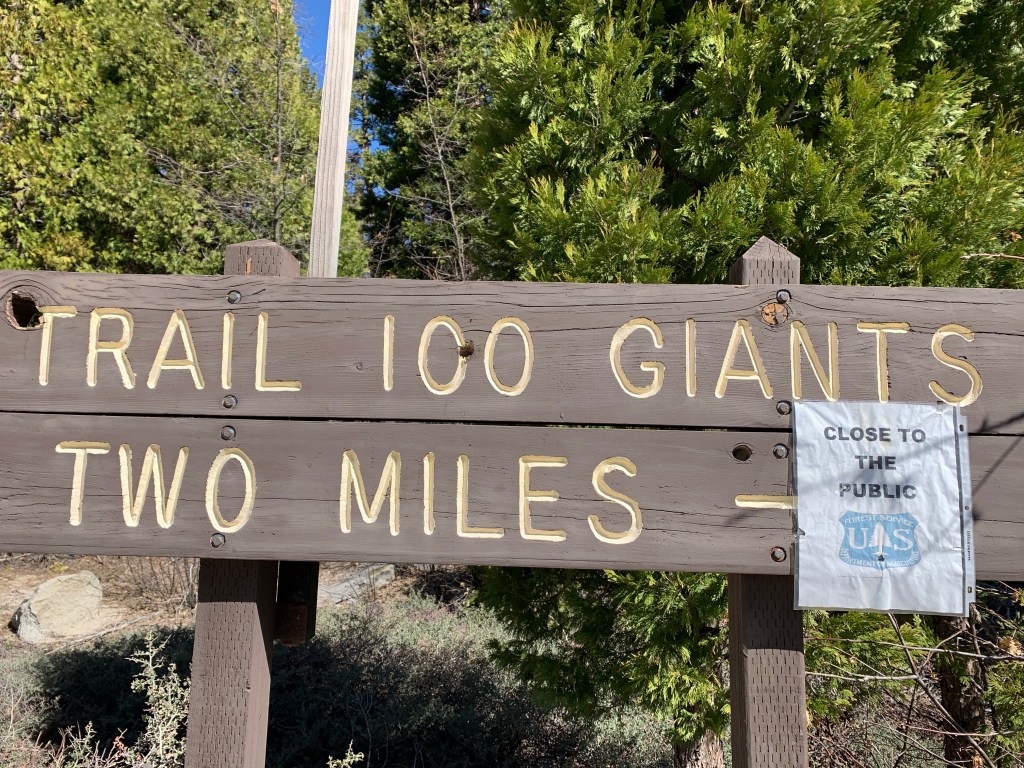
But wait! A fork in the road! A sign! To the right is a 23-mile dead end. To the left “Trail 100 Giants.” Yay! On closer inspection, however, is a piece of paper stating “Close to the Public”

We forge ahead anyway. Ignoring the GPS, the sign, the fear, we discover that the day use area is, indeed, open, that the trail of these hundred Sequoias is open, and that sometimes instinct and dumb luck are better friends than Apple products.

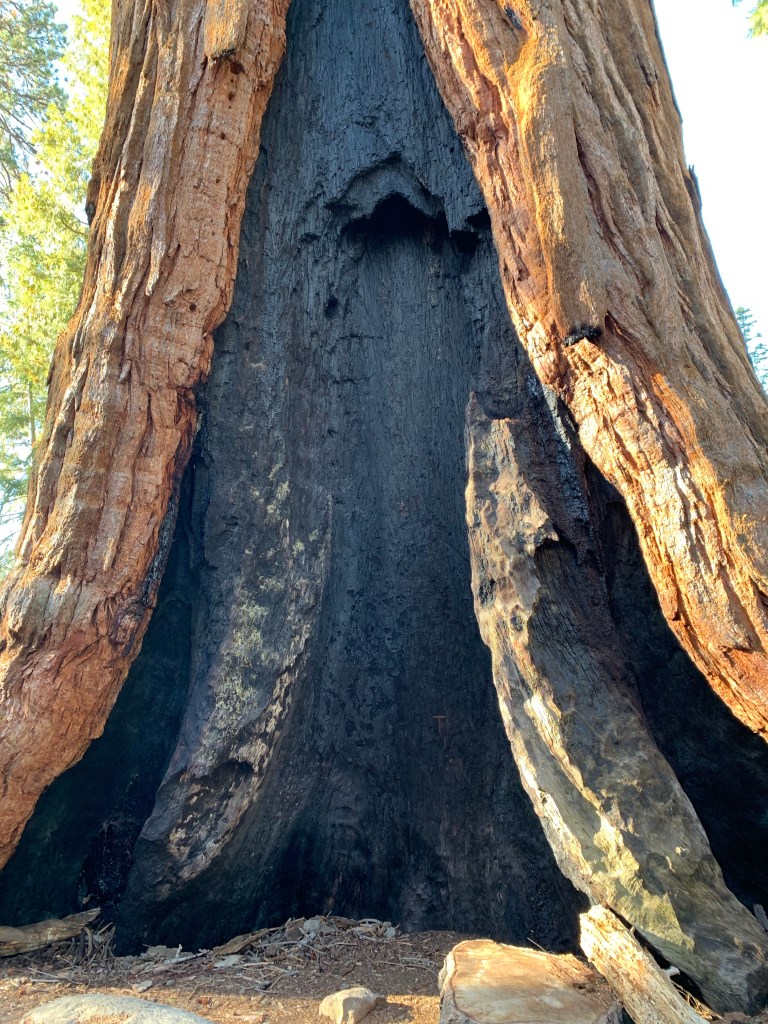
“Enjoy nature,” says the host of Redwoods Meadow campground, which sits across the road from the trailhead. He means anywhere but the Redwood Meadow Campground, which doesn’t open for two weeks. He just arrived today and is busy clearing brush. He doesn’t care if we park on the nearby little dirt road, and so we do. Tucked away, flanked by felled trees, their stumps shoulder-high, we rest well and spend the next morning wandering the path around these humongous trees that have withstood fire and wind and snow and humans.

In this state that has spawned Steve Jobs, Google, and the Intel microchip, we learn the power of nature’s valleys and mountains and canyons, that even the smartest smart phone can’t dominate. Outside of Yosemite, in the one-restaurant, one general store town of Forks, I return to what I do best: ask humans questions. Four decades of reporting come in handy. I ask directions to the park since paper maps of California aren’t clear. The teenage clerk pricing t-shirts gives me a hand-drawn photocopied map of the route from Forks to the Ansel Adams playground. I ask a local couple for the best route out of the park north for the next day. “Your GPS will say 120 but you want 140 to 99,” says Gary. He is right. 140 is a tad longer but wider and flatter.

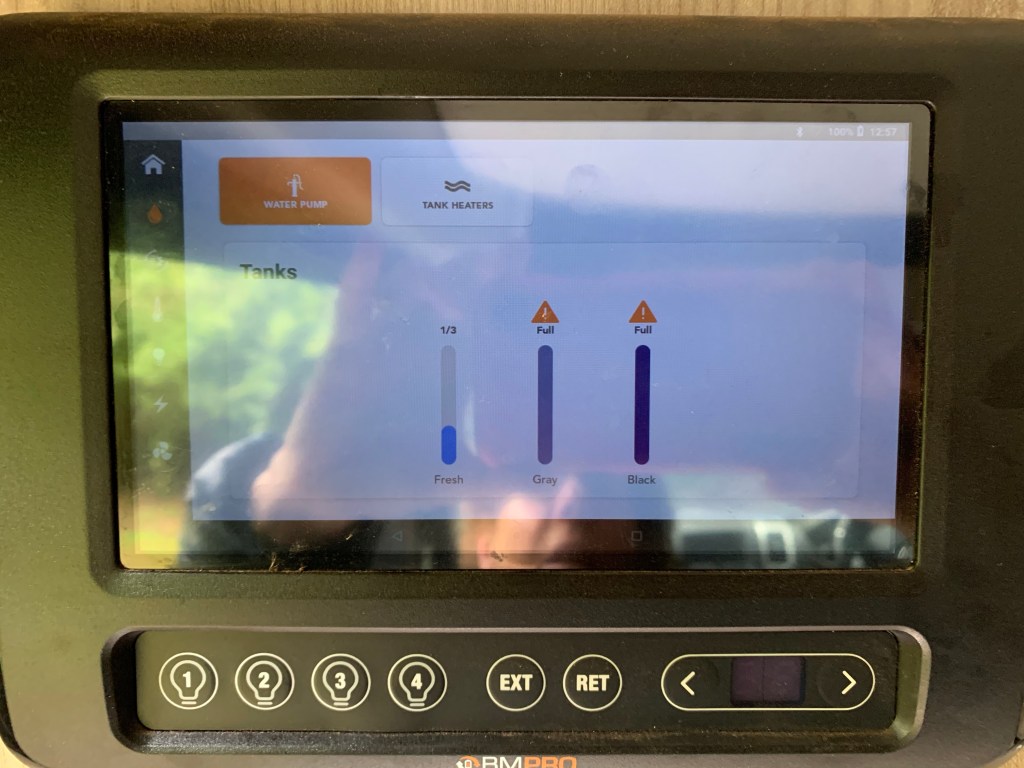
Three weeks into #vanlife, we are beginning to accept that technology is a gift – what’s better than Siri shouting accurate turns and exits? – but it is not to be entirely trusted. How does one explain that after a visit to the dumping station and water supply, the water tank measures 2/3 empty and the grey and icky black tanks full?

A Little Humility

The green plastic spatula disappeared yesterday. It dated back to camping days with small children so its loss wasn’t financial but convenience. How would we flip the salmon, the pancakes?

The good news about living in a space this tiny is that missing items inevitably turn up. We found the spatula resting in the dead zone behind its bottom drawer home. We figured that we’d do more damage removing the drawer than was worth the $3.99 for a new model.

And so we were reminded of another lesson learned on this rolling journey:

#Vanlife is humbling.

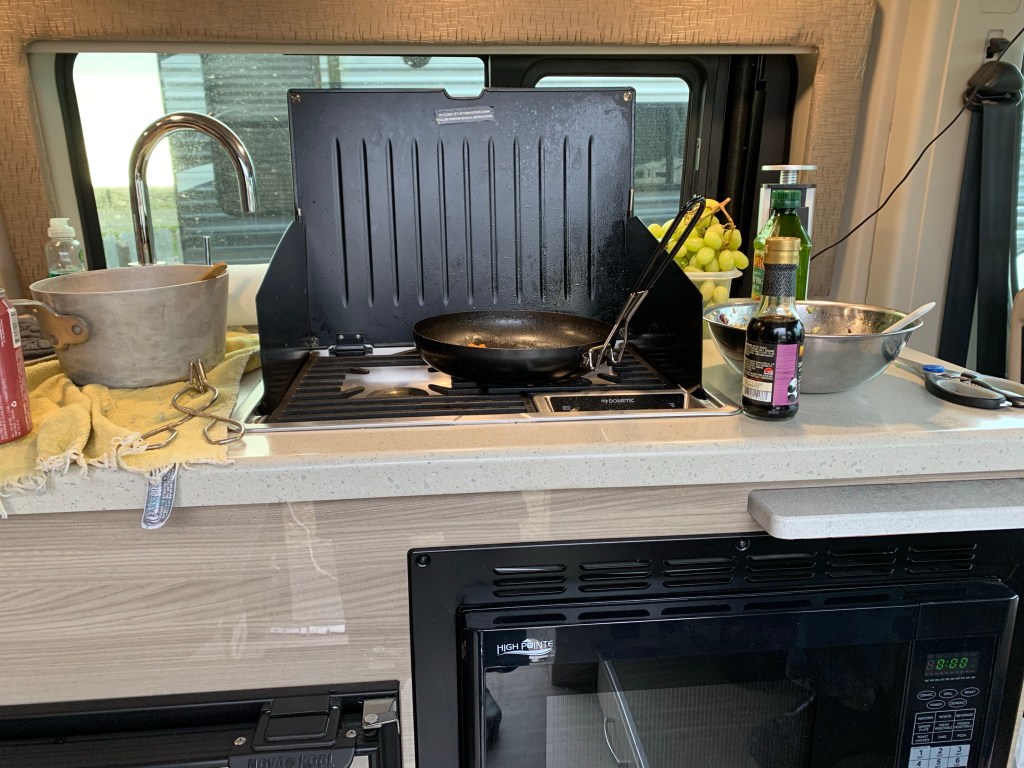
Food prep: Our home kitchen is compact, just big enough for major appliances, a handful of lower cabinets and even fewer upper cabinets. Dinner guests don’t linger long after grabbing a beer. in comparison to Abbey Road’s food station, however, it is enormous. In our tightly choreographed dance, one person, usually me, chops and pours and stir fries while the other, usually Bill, sits on the turned-around passenger seat.

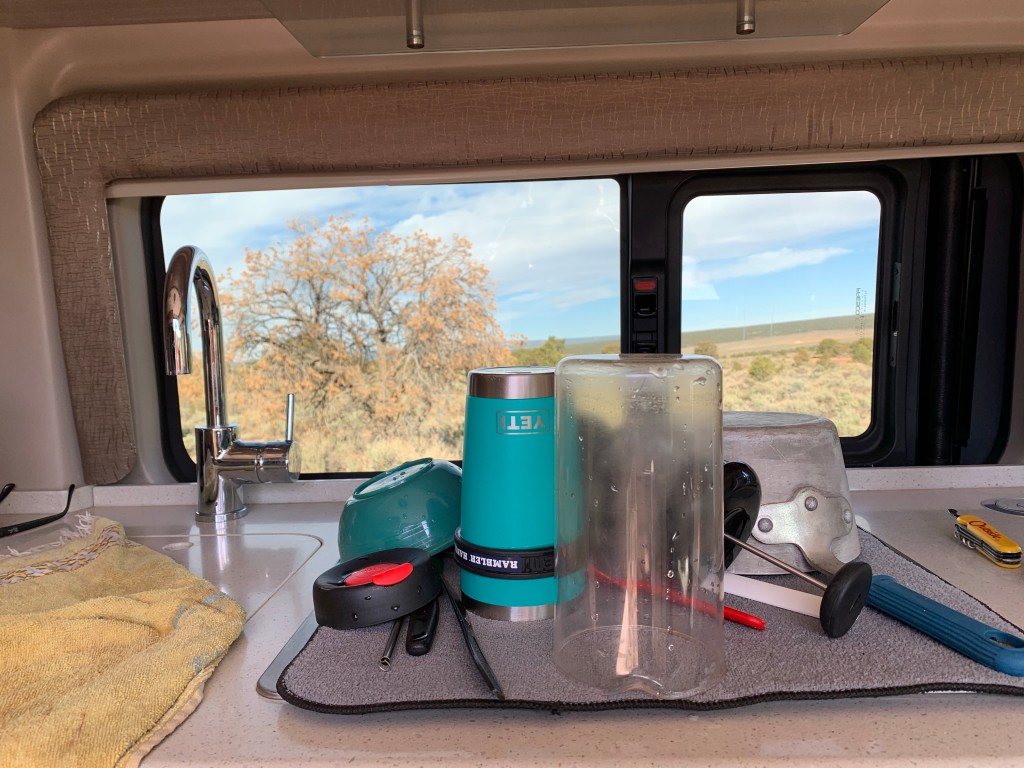
Reverse for the dishwashing. And the dog? She’s outside attached to a long lead, but not so long that she’s not at our feet begging for scraps.

Hygiene: Despite the electronics, the metal shelter, the running water and heat if you need it, van living is more camping than inside dwelling. To preserve your water supply and reduce trips to dumping stations, you use campground toilets and sinks and showers. When those aren’t an option, you go without that daily water cleanse, the regular hair washing. Make-up? Who knows where it is packed. The local elk don’t care if eyebrows are sparse.

Laundry: One of the perks of employed adulthood is an in-house washer/dryer. When was the last time you stepped inside a laundromat for more than a sleeping bag soak? #vanlife requires public clothes washing, which, save the one machine in Moab that accepted credit cards, requires lots of quarters.

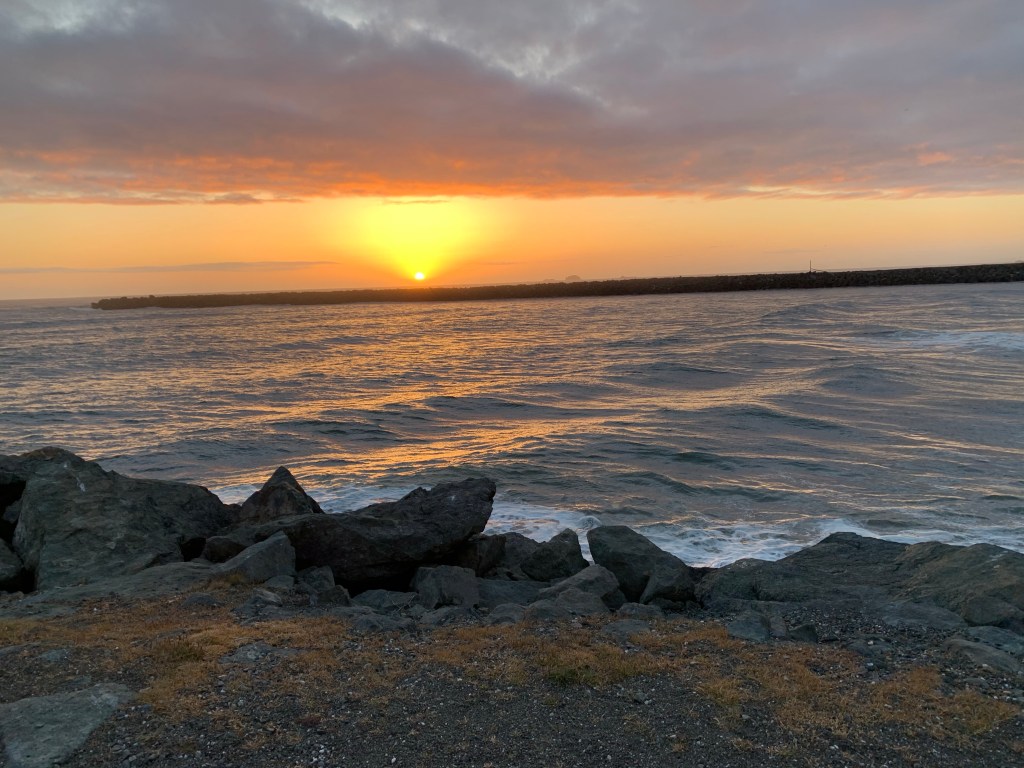
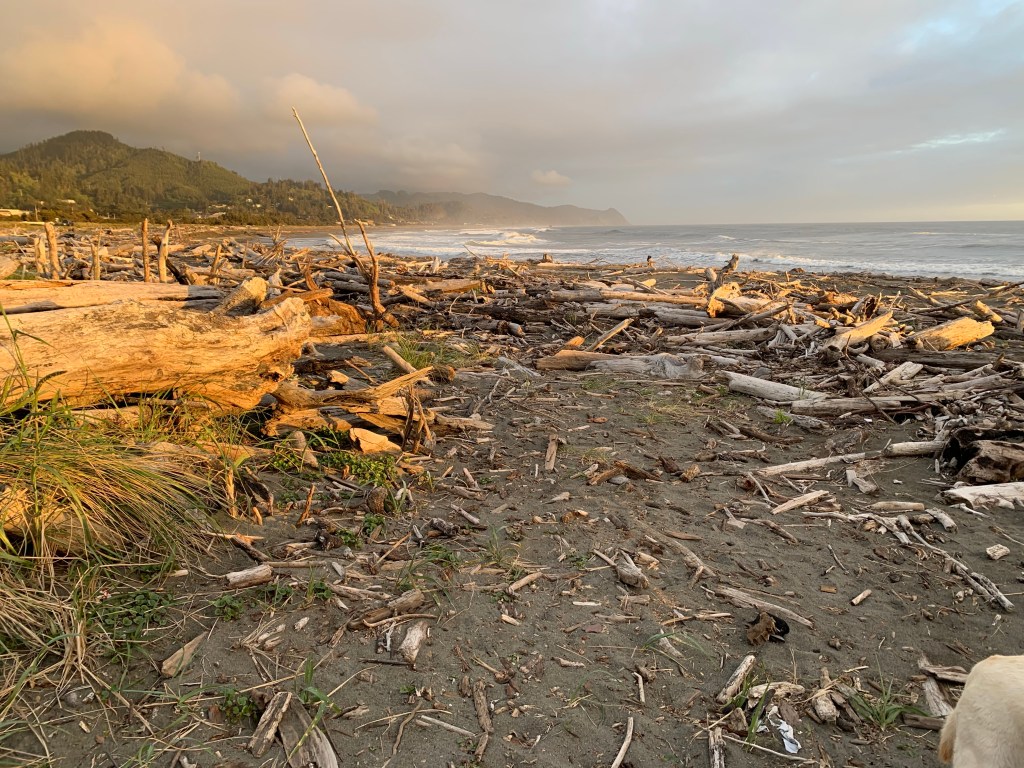
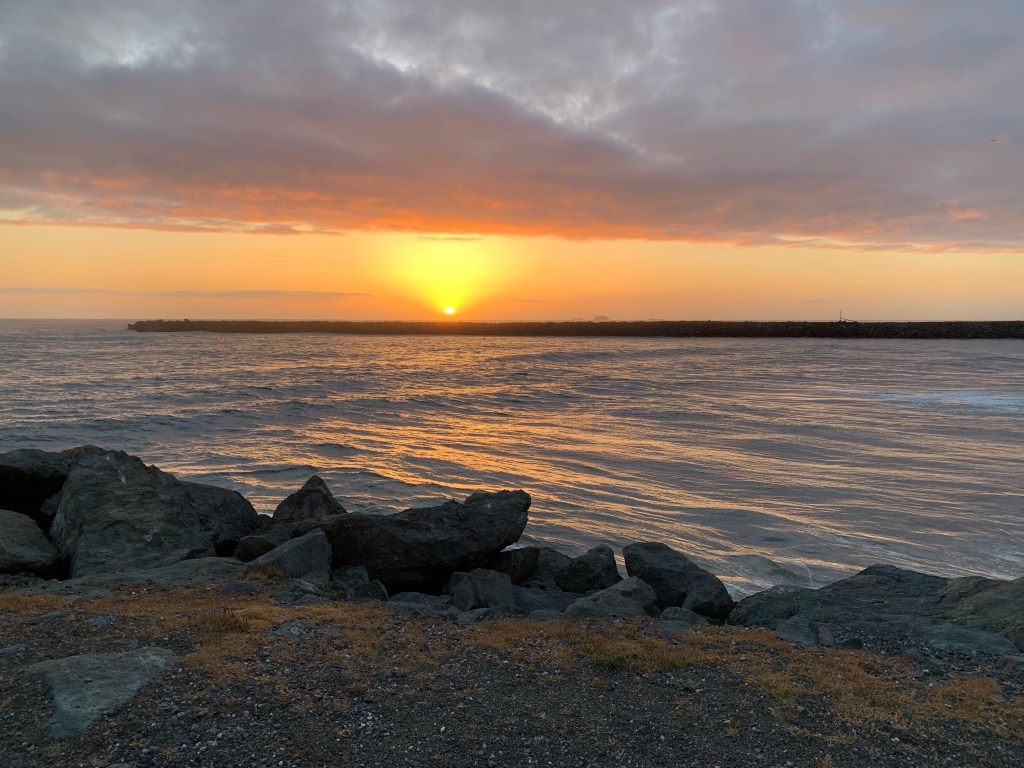
Humility, though, is a very good thing. At the other end is gratitude. Gratitude that we have a real kitchen, our own Maytag washer/dryer, and a return to daily showers and clean hair soon enough. Gratitude that these minor inconveniences are dwarfed by the inherent joy of rolling from one natural wonder to another, of camping in the Redwoods one night and watching seals frolic in the Pacific on the Oregon Coast the next. Of the ease in which we can visit one son at the trip’s beginning and the other two weeks later. Of visiting our godson and his new pup on Sunday and lifelong Seattle pals on Monday.

After we clean up the breakfast dishes, we’ll say good-bye to Gold Beach and wander north on the Oregon coast to Florence and a night in a national forest. Maybe tomorrow we’ll employ the new spatula purchased at McKay’s Market.

Parking Lot Slumber

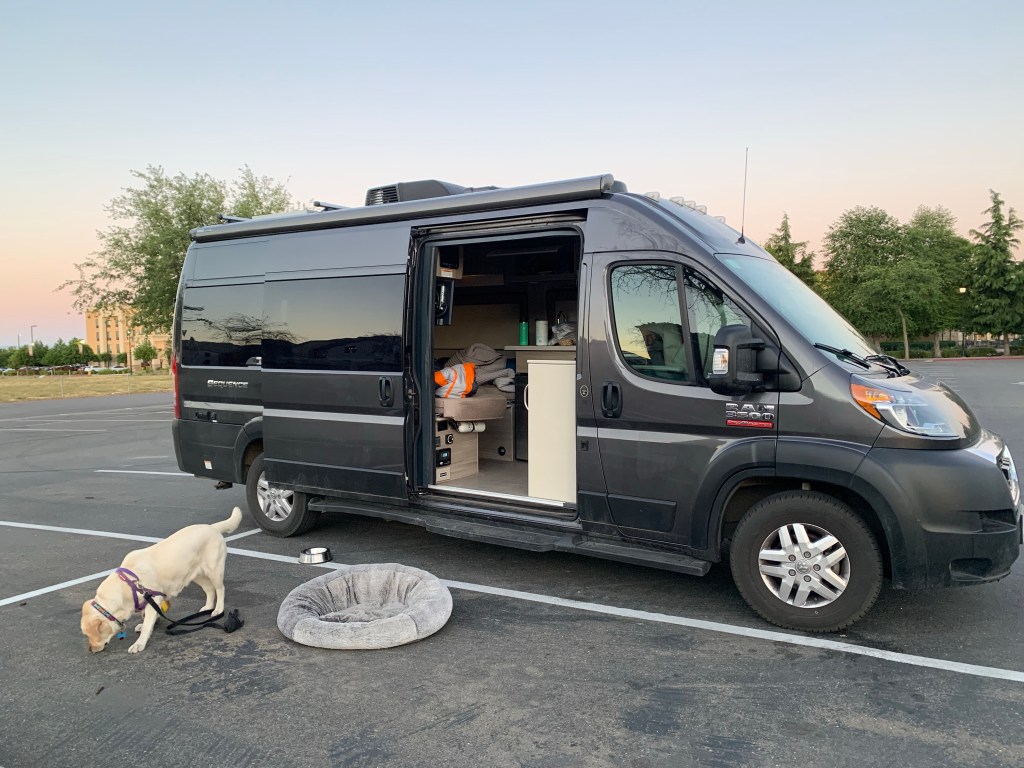
Things are pretty quiet here in the Bass Pro Shop parking lot just off CA 120 in Manteca. Eighteen minutes until closing. With luck a security guard will not knock on the door and ask why a nice couple and their lab from Newburyport, MA, in a rented Dodge RAM camper van, are spending this toasty Tuesday night on mall pavement.

#van life, officer.

In truth, the answer is poor planning. Or rather fluid planning. We reserved campground slots on Phase One of this journey. April is prime tourist season in the Southwest and Denver pals encouraged, no ordered, is to secure sites. Very wise. Very assuring to know we had a legit site to park at day’s end, even if that site was crammed between a 30-foot Jayco and a motorcycle just off the main drag in downtown Moab.

But if we learned one thing during the year of European adventures when I taught in London, it is that there are two kinds of travellers: plotters and meanderers. Plotters require precise itineraries, a daily schedule of events and feedings. Meanderers, well, meander. My brother is a plotter. During a visit to Seville, he had booked three walking tours from his hotel room before Spouse Bill and I had opened the door to our Airbnb. While he learned about the Spanish city from his guides, we wandered snd observed, chatted with locals and drank coffee on church steps. When the three of us reconnected, much of what we learned was the same.

Because we are self-sufficient in the van we call Abbey Road – Abbey for Abelona, the Roman goddess of safe returns, and Road since Bill will insert a music reference whenever possible – and because we have no specific destinations before our Seattle arrival May 10, we have opted to let the journey guide us. Sounds romantic, doesn’t it?

Until we landed in the Bass Pro parking lot, I would have said yes. A daily scramble through campsite apps – The Dyrt, Hipcamp, Recreation.gov – alerted us to openings at campgrounds and options for setting up shop in the woods, either National Forest or BLM property. We did well:

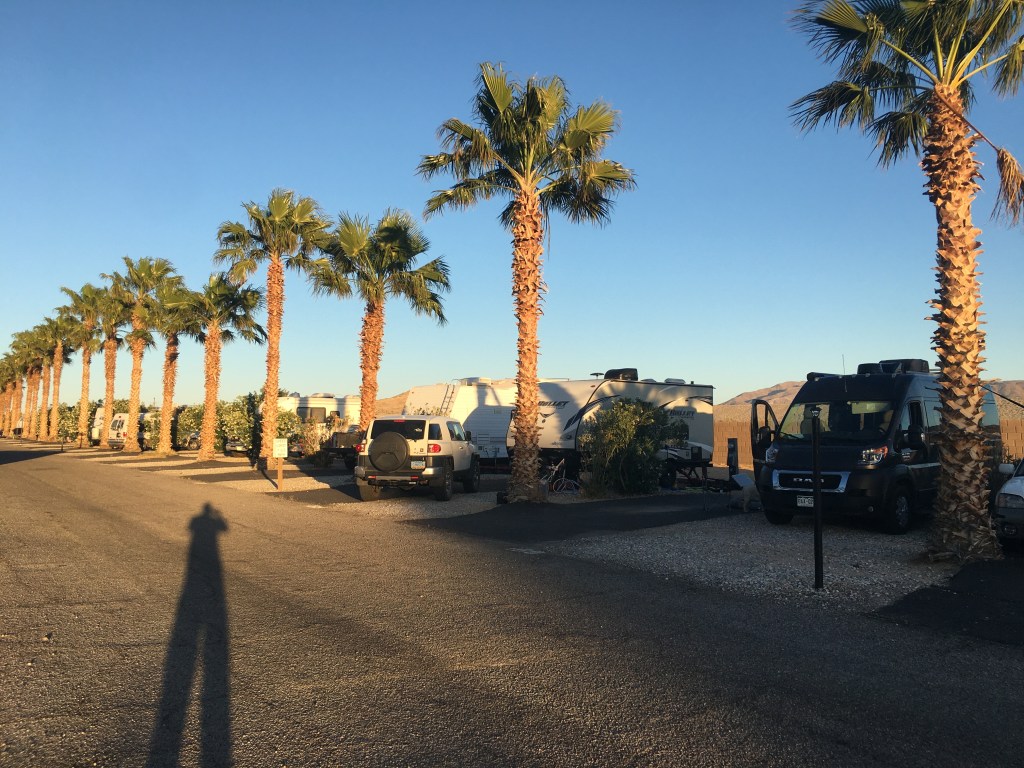
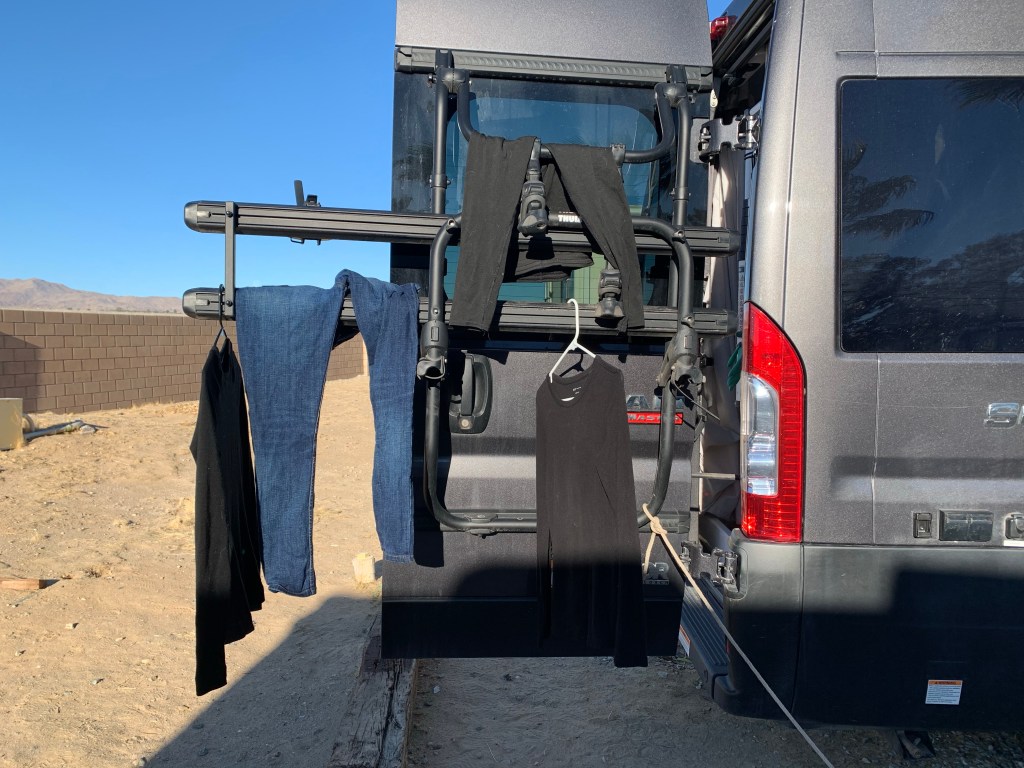
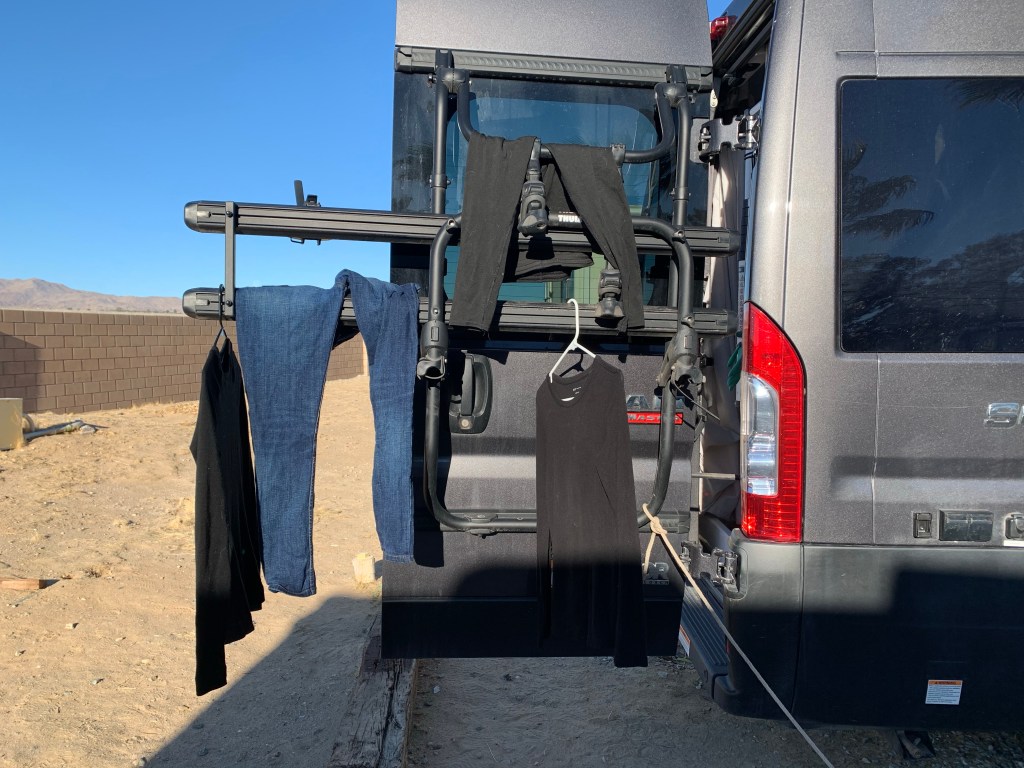
Quick dry laundry in the hot desert breeze in Twenty-nine Palms, CA, just outside Joshua Tree National Park.
Sequoia National Forest
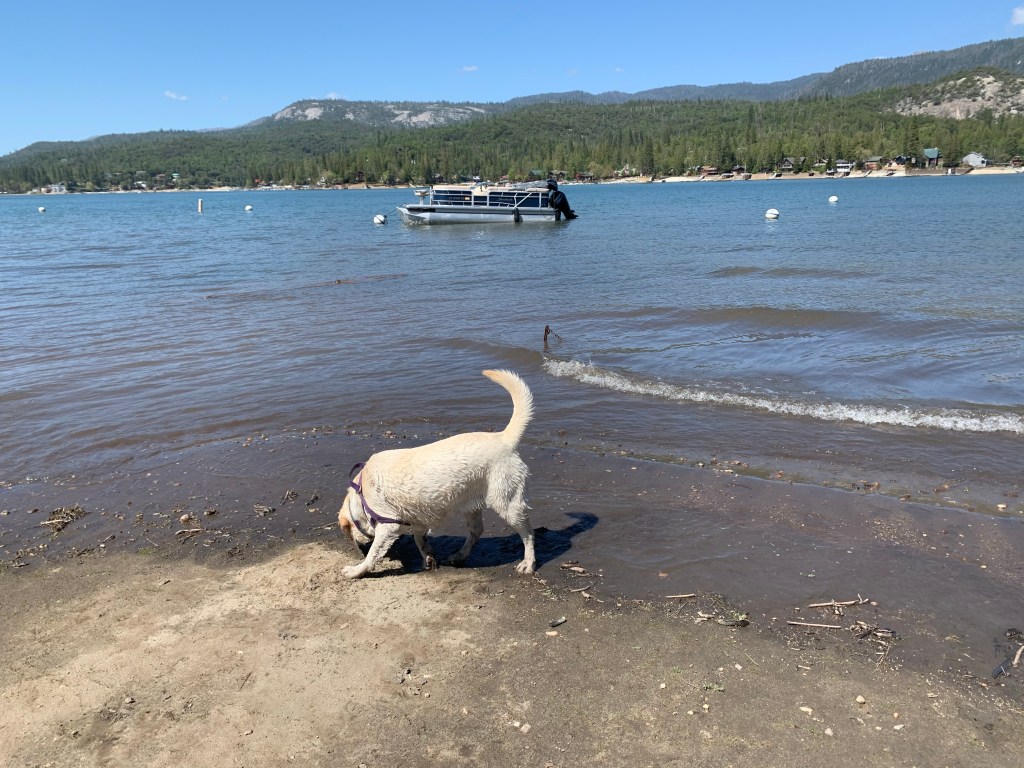
Forks Campground in the Sierra Nevada National Forest. When Maisie wasn’t romping in Bass Lake she sniffed for and barked at the lingering odor of our next door neighbor, a year-old bear the camp host calls BooBoo.

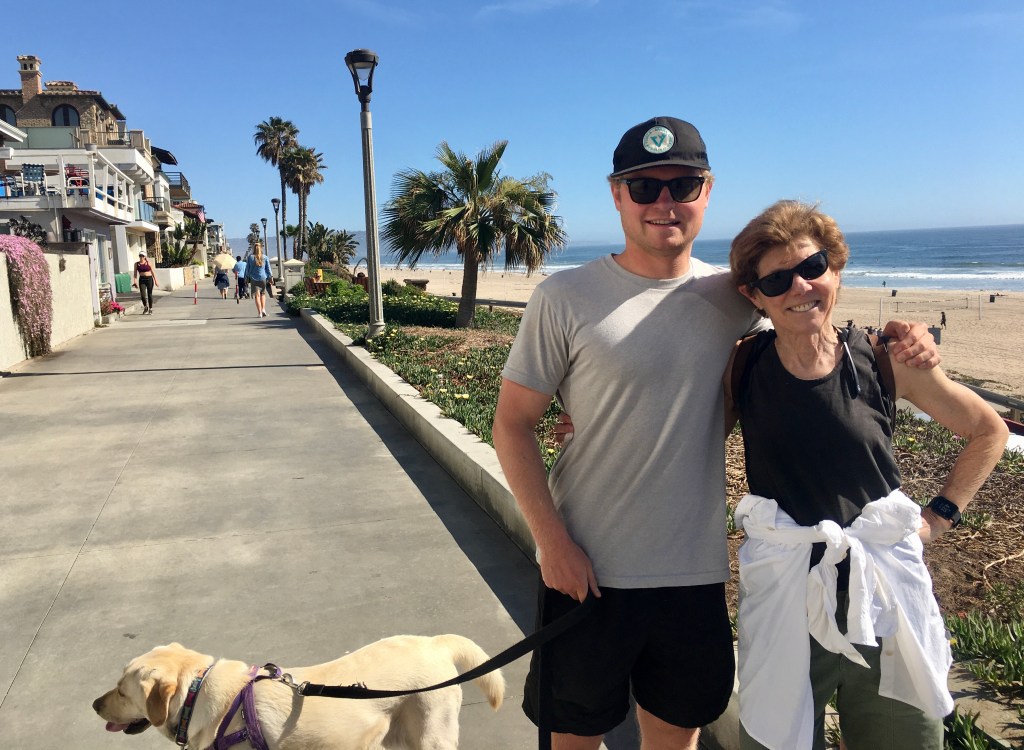
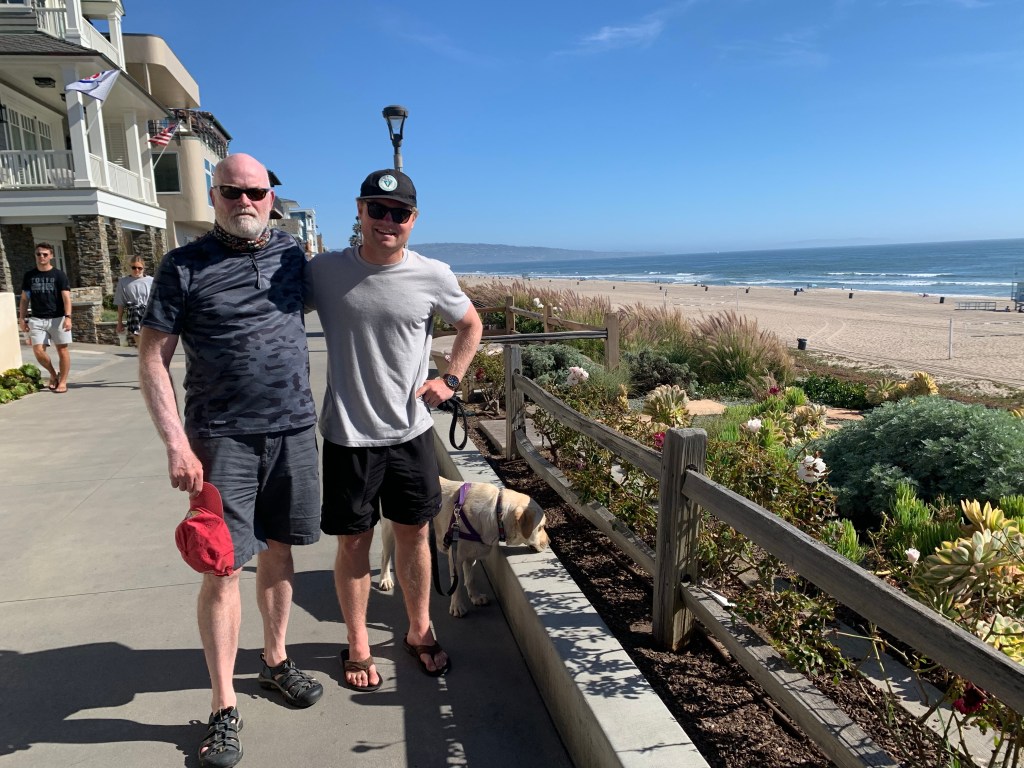
On the marginal side was the night on a slight hill in a Manhattan Beach, CA neighborhood just behind Son#2’s rental. The plus was that we were up and out of there so early we snagged a primo parking spot on the waterfront and spent the morning walking the boardwalk to and from Hermosa Beach, soaking in that California sunshine.

And then we lingered too long at Yosemite and lost the option of staying with friends in the Bay Area. So here we are:

We are sweaty and paranoid. We are kept awake by a nearby train and highway roar, not to forget the endless quacking of geese at a made-for-mall pond across the lot. The lights from the store beam into the van under every crevice.

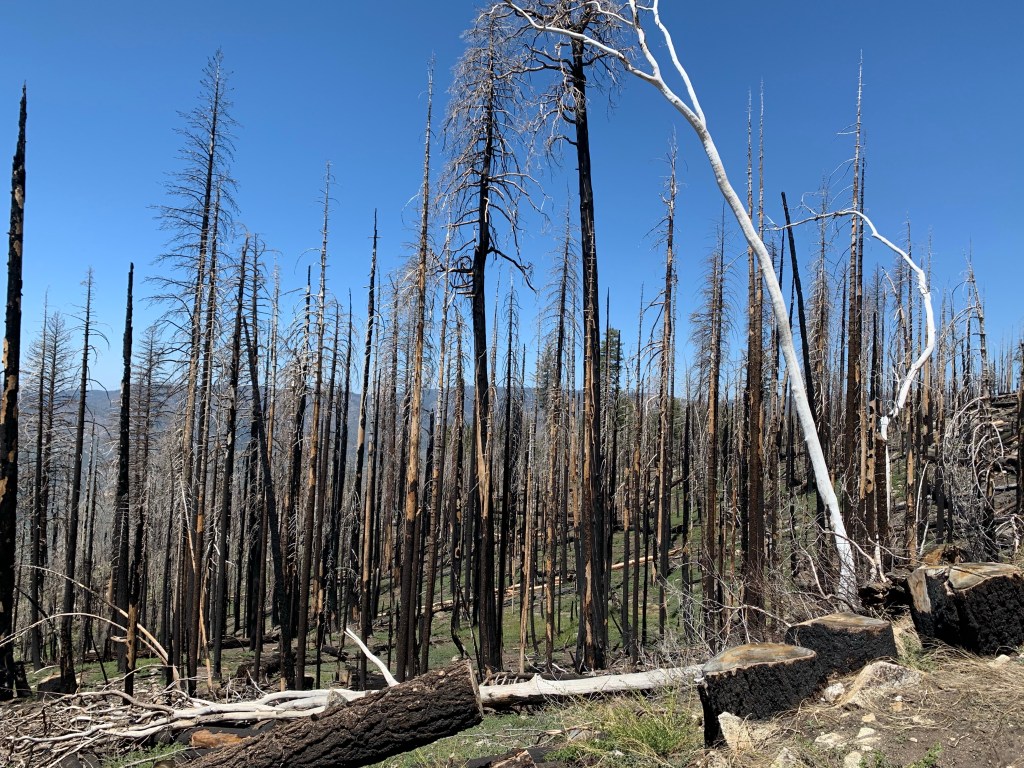
And as I toss on my bunk, I think of control. And how we seek to bend the forces to our will. We want freedom and flexibility and a quiet flat site available that day. That minute. And then I think of the beauty of the Sequoias and El Capitan and the iconic waterfalls rushing down Yosemite mountainsides. As powerful in their majesty as the acres of scorched earth and felled trees are horrifying. We can control nature only so much. One local grew teary describing the devastation brought by the Mono winds and fall fires. But in time, she knows, the landscapes will revive.

And in time, we will sleep and wake to find a better site tomorrow.

California Living – and Driving

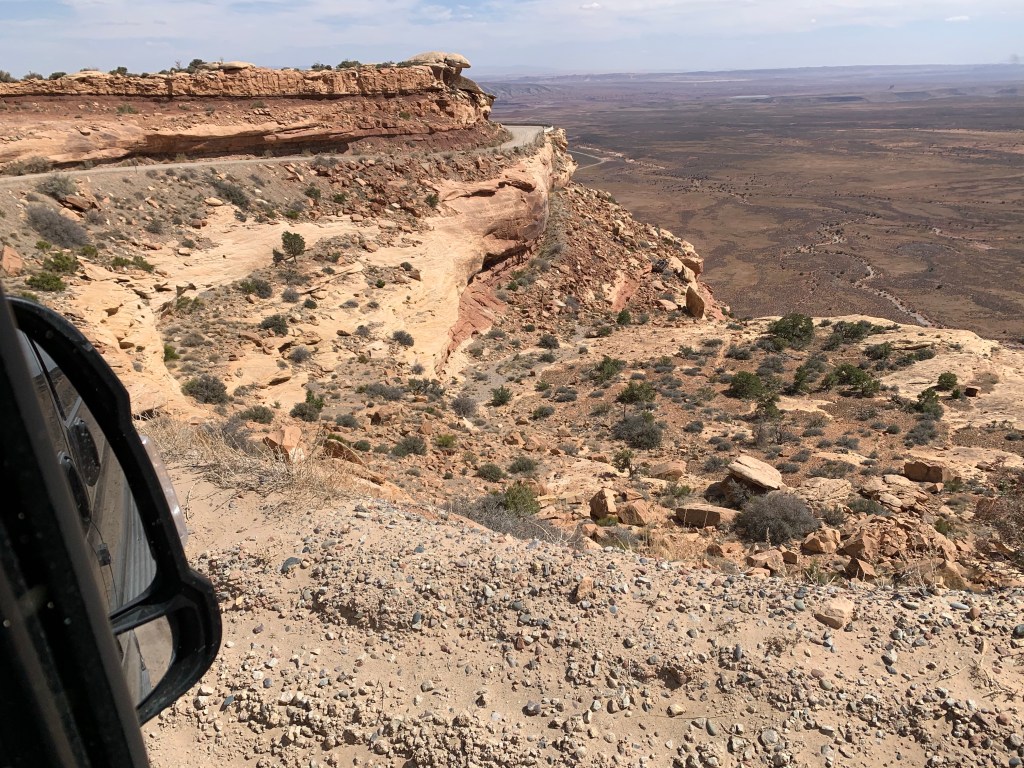
There’s #vanlife in theory and #vanlife in practice. In the first, the vans are parked and the residents jump into streams or swing on a hammock. In the second, vans are on the move, rolling down interstates or clinging to the edge of windy gravel roads along canyons. #vanlife is, if anything, driving. Lots of driving.

On our team, Spouse Bill prefers to drive and I prefer to navigate. But there are days when that labor distribution is decidedly unfair, as in the trip from the Dead Horse Ranch State Park in Cottonwood , AZ to Twenty-Nine Palms, CA. While I am not unfamiliar with driving rental Camrys on California freeways, steering a 9’5” tall, 9,350-pound camper van past 18-wheelers and through fierce winds for hundreds of miles was new. And unnerving. The stove top rattled. The bathroom doors creaked. Olive oil and balsamic vinegar bottles clinked. Once off the 10, we still had nearly 100 miles of desert.

Somewhere near the rest stop in Blythe, CA, I began questioning the rest of our itinerary. SoCal thru Sequoia and Yosemite and up the Oregon Coast to Seattle, where a bunch of close pals await. Then back to Denver through Wyoming. Mile after mile. One night stays. Should this survey-of-the-west tour, as we call it, morph into something more focused? Should we have stuck to the Southwest for the four weeks?

But then we landed in the Mojave Desert, where the wind blew soft and the Joshua Trees stood guard. Since dispersed camping with a hound is dicey in searing heat, we opted for the safety of a campground. Friendly neighbors and full hookups, which never meant anything until this trip. Hooray for someone else supplying our electric power (Microwave! Music!) and water (Dishwashing! Toilet flushing!).

After a driving tour of Joshua Tree National Park (no dogs on trails, which was fine with Maisie since she refused even a walk through the unforgiving sun of the shadeless campground) we headed to Manhattan Beach to reconnect with Son #2, who has been working his Boston job remotely and surfing the Pacific for the past two months. More trucks. More congestion. A couple of accidents and breakdowns. And this was pandemic traffic.

By 3 p.m., however, reunited with our boy, we strolled the path that runs from Malibu down the coast. Mingling with roller bladers and beach bikes and barefoot babies, we breathed in that ocean air and felt the warm California sun heat our bones. We watched surfers and beach volleyball games and later ate burritos and drank Pacifico with Jordy and his roommates at an outdoor table overlooking a stream of Jags and Aston Martins and motorcycles blasting tunes on the main drag.

And all that driving faded in the rear view mirror.

Until Sunday, when we hit the road and head north to Sequoia National Forest.

Camping Wherever

The woman with the broad face by the door at the Kayenta, AZ Chevron station smiled ever-so-slightly. “Camping?” she said, pointing up the highway from where we had just driven. “Utah. Or maybe the Grand Canyon.”

What she didn’t say was: “Idiot. There is no camping on tribal lands.” And tribal lands – Navajo and Hopi country – is where we’d drive for the next few hours into darkness.

Instagram paints dispersed camping – settling down for the night/s on public land – in a romantic hue. Wake up by a mountain stream, a California beach, a field of wildflowers. Vanlifers rave about the freedom of pulling over anywhere. What they neglect to add is that finding those glorious, and even not so glorious, free spots requires research.

As in studying the area that you hope to stop for a sleep to ferret out the possibilities.

Had I done a little legwork, I would have known we would not find a welcome mat between Monument Valley and the Grand Canyon. With the Chevron woman watching, I tapped my camping apps and reserved a dry camp site (no water, no bathrooms, no nothing) 30 miles from the Grand Canyon, our destination.

Back in the van, Bill drove and I fed him dinner. Peanut butter crackers. Bread with chicken. Pita chips. He was well-carbed. We had hours to go and I feared that this failed first plunge into dispersed camping would be our last. One hour on the road. Two hours.

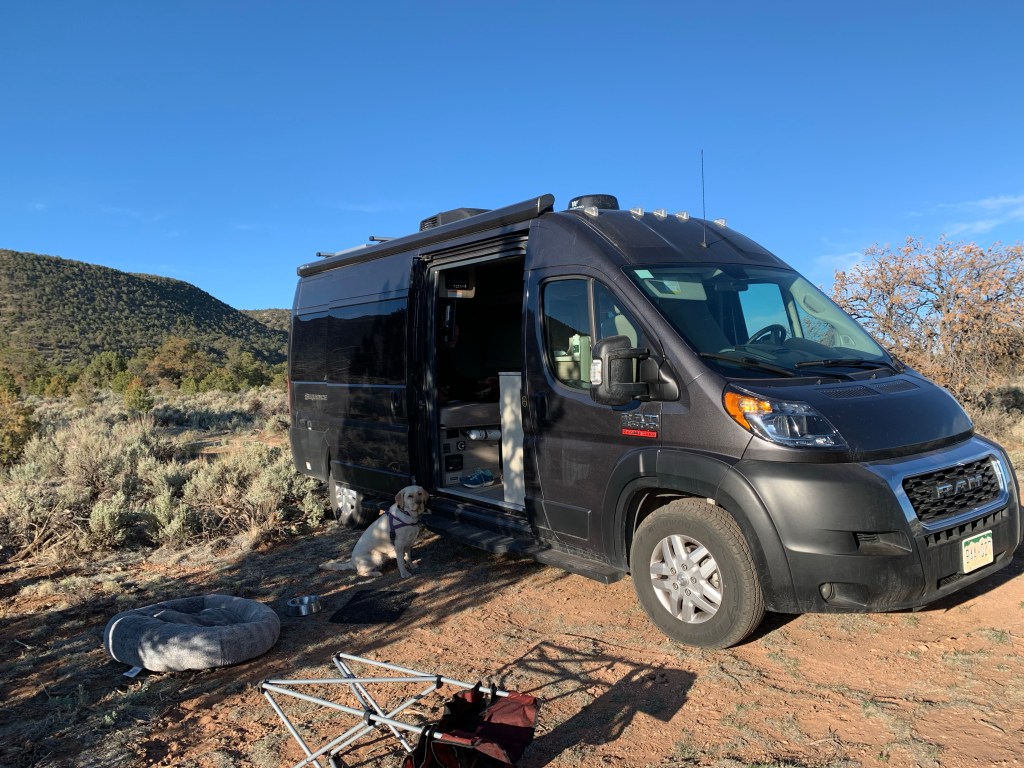
And then I remembered that Denver Son had texted us a link to a free spot on a fire road in a national forest outside the Grand Canyon. Fifteen minutes away!!! Bill looked doubtful. But it was on the way to the spot I had reserved, which Google maps said was still hours away, since it was, it turns out, on the OTHER side of the Grand Canyon. And so we went for it, finding ourselves parked for the night in a peaceful field surrounded by woods.

The Kaibab National Forest, like most national forests I later learned, welcomes campers. Sites are remote, offer zippo amenities, but they are free. All the rangers ask for is to avoid fires on windy days, and to leave no trace – no beer cans, no toilet paper, no food scraps.

Rambled through the woods the next morning before heading to one of the seven natural wonders of the world and a reserved site at the Mather Campground within the national park.

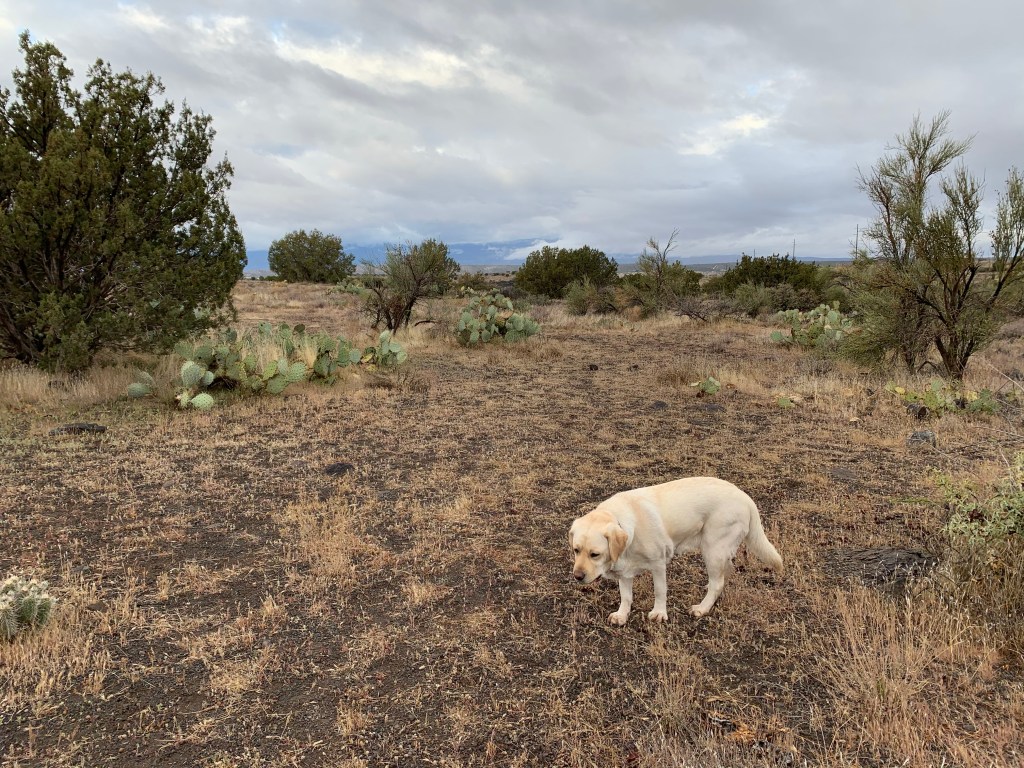
The night after that, however, following a recommendation from the Sedona Visitor Information greeter, we chugged up yet another national forest fire road, this one just outside the bustling downtown tourist Mecca. No beer tents or silver jewelry shops here. Only acres and acres of cactus and yucca plants and the occasional rumble of a Subaru or Winnebago seeking a spot to call home.

Helmet Required

The sun is bright, the skies are clear, and the wind howls with a gale force on this remote spot on a fire road in a National Forest just outside of the Grand Canyon. Denver Son recommended this site and we are grateful – grateful that we didn’t have to drive another hour in the dark to a regulation campground. Grateful for the quiet and the hike — first off-leash for Maisie since she left home – just after sunrise this morning. Grateful for the chance to reflect on our first week of Van Life.

Lesson 1: A camper van is not an RV. RV’s have space – living areas, bed areas, separate toilets snd baths. A camper van is a tidy unit with everything smooshed into the 12-feet behind the driver. Two people cannot chop and cook at the same time. Two people cannot dig through the storage compartments – ours line the exterior walls above our heads, just like the ones airplane’s provide for little wheelie suitcases – at the same time. Two people can sleep at the same time, but only after separate trips to the sink and storage. The good news about navigating a tiny space is that you learn to consolidate, to focus only on the necessary, to appreciate that we really don’t need drawers and closets crammed with clothes we don’t wear and pans we don’t use.

Lesson 2: Watch your head. Different vans have different set-ups; check out any #vanlife post and you’ll see cozy kitchens with hanging plants and comfy lounge areas. Our rented Thor Motorcoach, however, is full of sharp edges. Spouse Bill, at 5’11”, has daily run-ins with the overhead compartments – open and closed. He clonks his head on the edge of the storage unit above the driver’s seat. I’m 5’2”, which one would assume grants me unlimited clearance, but I’ve nailed my skull on the edge of the TV we don’t use and the glass screen above the stovetop. This is a test of memory and so far we have failed. But, hey, today is a new day and perhaps we’ll remember to duck.

Lesson 3: Cherish compostable wipes. Van Life is a reminder that resources are finite. Without water and electric hook-ups, the van requires arranged stops to add water to one tank and remove soiled fluids from two others. This means judicious dishwashing and rinsing and using public toilets at every opportunity. And cleaning hands and surfaces, which are forever blanketed by the fine red dust of the Southwest, with compostable wipes. Thank you Martha and Robin for the supply.

Lesson 4: As soon as I finish writing this, we will pack up this rig and head to the Grand Canyon for two-days of hikes and exploring. What can beat that?