Google Maps. Apple Maps. Punch in the address one more time.
If, as the sign says, we are in the Sequoia National Forest, where pray tell are the giant trees? Beside us roars the Kern River and we just passed Isabella Lake, wild with white caps in this wind. In front are layers of brown, arid mountains dotted with a few pines. We drive thru tiny towns featuring saloons and rafting trips. But no big trees.
We drive and drive, begging for cell reception, seeking details on our paper map. We are here early in the season and gates to campgrounds and day use areas we pass are closed. We stop in Kernville, home to the Ranger’s Station. Closed. Bill eeks out enough bars to locate Trail of 100 Giants, a destination. But once on the twisty, turny, narrow pavement leading up, up, up, the ether is lost to the valleys. We’re on our own.
Throughout this journey, we have depended upon, been challenged by, writhed in frustration over technology. Our van harbors more panels and buttons than the Lunar Module. The Pioneer Console’s Bluetooth hooked up easily to my iPhone, but refused to project anything but the soundtrack to “ Hamilton.” It doesn’t do directions. Then it stopped working all together, which meant no back-up camera. Very bad when navigating a 21-foot long beast. Then, as quickly as it died, it revived.
Same story with the kitchen fan, the bathroom fan, the water heater. Do we suffer from ESO – Equipment Superior to Operator – or vice versa?
As we wind our way deeper into the Sequoia National Forest, which is integrated into but not to be confused with the Sequoia National Monument and the Sequoia National Park, which sits below Kings Canyon National Park, the fear of darkness and “No Overnight Camping” orders rises. And we don’t have Siri to guide us.
But wait! A fork in the road! A sign! To the right is a 23-mile dead end. To the left “Trail 100 Giants.” Yay! On closer inspection, however, is a piece of paper stating “Close to the Public”
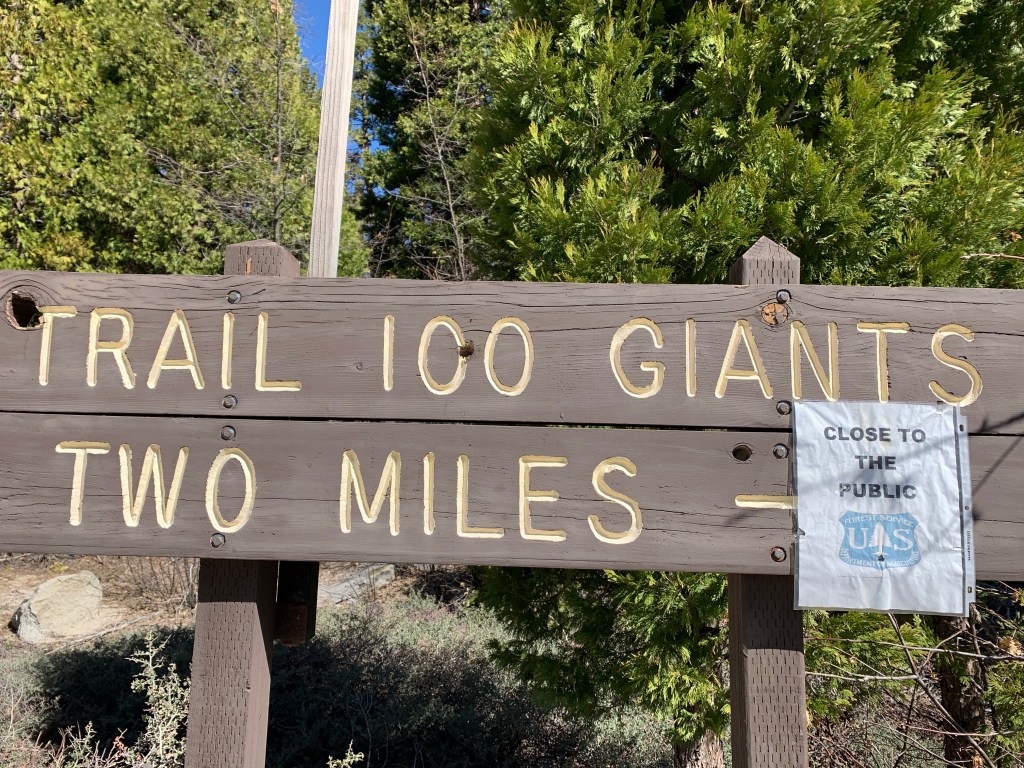
We forge ahead anyway. Ignoring the GPS, the sign, the fear, we discover that the day use area is, indeed, open, that the trail of these hundred Sequoias is open, and that sometimes instinct and dumb luck are better friends than Apple products.
“Enjoy nature,” says the host of Redwoods Meadow campground, which sits across the road from the trailhead. He means anywhere but the Redwood Meadow Campground, which doesn’t open for two weeks. He just arrived today and is busy clearing brush. He doesn’t care if we park on the nearby little dirt road, and so we do. Tucked away, flanked by felled trees, their stumps shoulder-high, we rest well and spend the next morning wandering the path around these humongous trees that have withstood fire and wind and snow and humans.
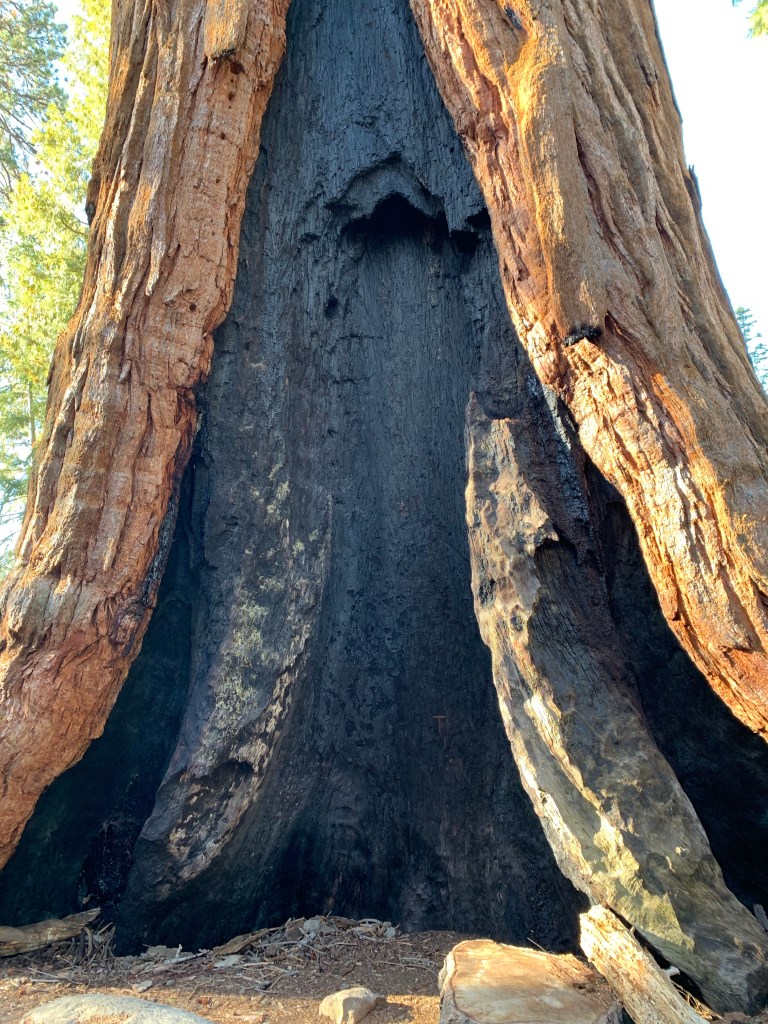
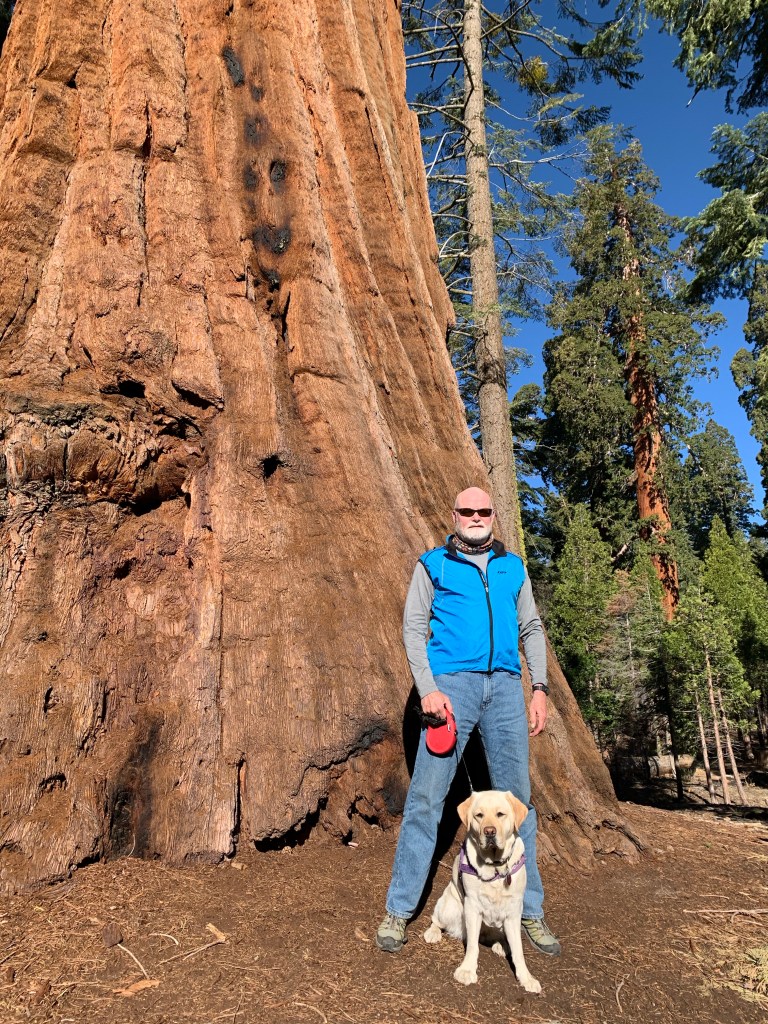
In this state that has spawned Steve Jobs, Google, and the Intel microchip, we learn the power of nature’s valleys and mountains and canyons, that even the smartest smart phone can’t dominate. Outside of Yosemite, in the one-restaurant, one general store town of Forks, I return to what I do best: ask humans questions. Four decades of reporting come in handy. I ask directions to the park since paper maps of California aren’t clear. The teenage clerk pricing t-shirts gives me a hand-drawn photocopied map of the route from Forks to the Ansel Adams playground. I ask a local couple for the best route out of the park north for the next day. “Your GPS will say 120 but you want 140 to 99,” says Gary. He is right. 140 is a tad longer but wider and flatter.
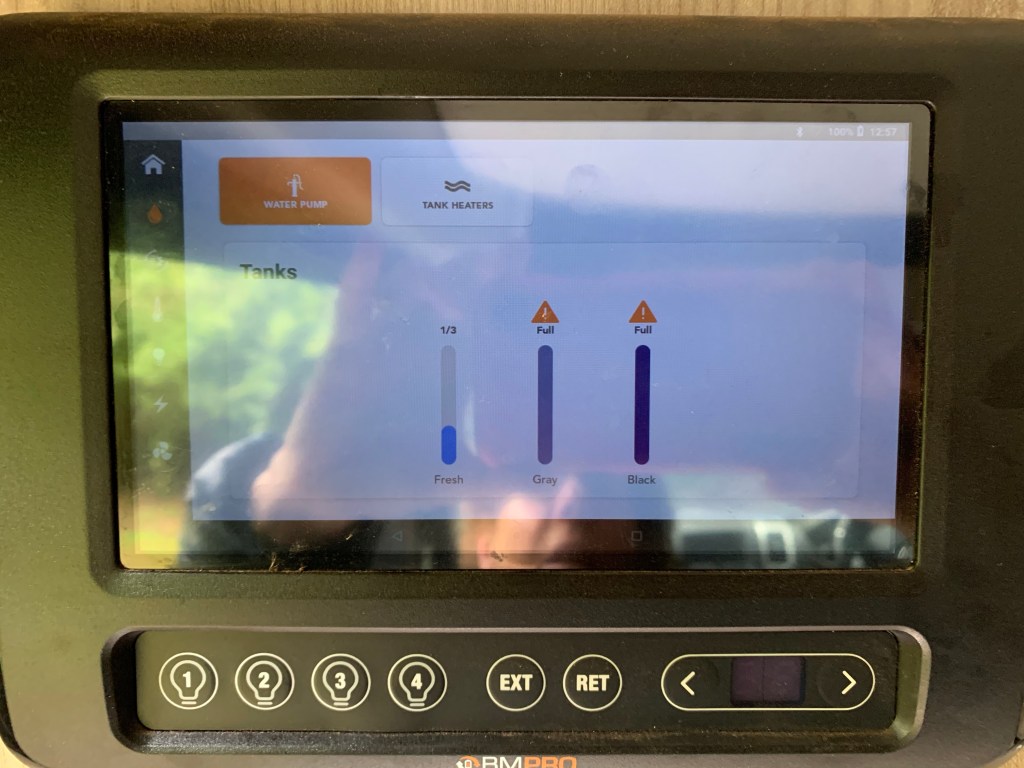
Three weeks into #vanlife, we are beginning to accept that technology is a gift – what’s better than Siri shouting accurate turns and exits? – but it is not to be entirely trusted. How does one explain that after a visit to the dumping station and water supply, the water tank measures 2/3 empty and the grey and icky black tanks full?
 Driving Miss Maisie